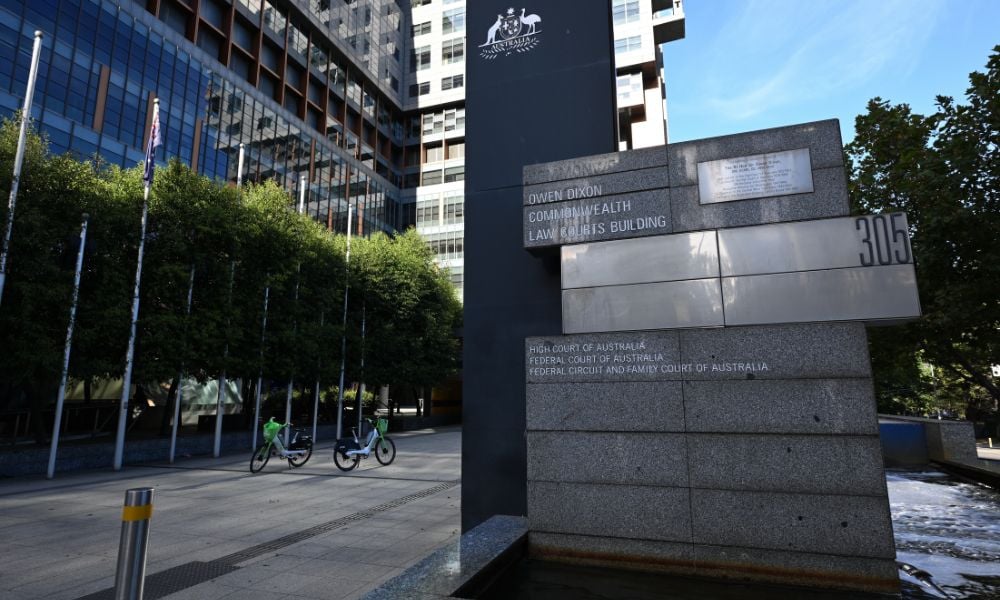
Proceedings sought to invoke Corporations Act’s ‘whistleblower’ protections

In proceedings seeking to invoke the “whistleblower” protections in part 9.4AAA of the Corporations Act 2001 (Cth) and rely on s 345 of the Fair Work Act 2009 (Cth), Australia’s High Court declined leave to issue or file a certiorari writ application.
Through an originating application and statement of claim filed on 20 July 2026, the applicant In the matter of an application by Bilal for leave to issue or file [2026] HCASJ 39 tried to bring proceedings under the Fair Work Act.
On 3 August 2026, the Federal Court of Australia’s registry staff notified that they did not accept the original application documents in accordance with Justice Stellios’ direction given under r 2.27(e) of the Federal Court Rules 2011 (Cth).
On 24 August 2026, the applicant attempted to apply for an extension of time and for leave to appeal from Justice Stellios’ decision.
On 25 August 2026, the registry staff informed him that they had rejected the appeal documents for filing in line with Justice Raper’s direction made under r 2.27(e). The staff treated the documents as an attempt to institute proceedings that were “an abuse of process” and “entirely without merit.”
On 29 August 2026, the applicant sought to file a further application under s 39B of the Judiciary Act 1903 (Cth) and the Administrative Decisions (Judicial Review) Act 1977 (Cth) in connection with the non-acceptance of the original application documents.
The registry staff notified that they had rejected the further application for filing according to a further direction issued under r 2.27(e).
On or about 22 September 2026, the applicant requested leave to issue or file an application for a constitutional or other writ. Specifically, he sought a writ of certiorari to quash:
A single justice of the High Court dismissed the leave application. Considering this a clear case for exercising its discretion to deny leave, the High Court described the application as frivolous and abusive of process.
The High Court found no tenable basis for invoking its jurisdiction and no arguable basis for a jurisdictional error.
First, the High Court justice rejected the applicant’s argument that Justice Stellios and Justice Raper had made their directions “without, or in excess of, jurisdiction or power.”
The High Court explained that r 2.27(e) aimed to prevent the filing of documents abusing the court’s process on their face. The High Court added that Justice Stellios and Justice Raper did not finally determine the merits of the proposed claims.
Second, the High Court disagreed with the applicant’s assertions of denials of procedural fairness and an opportunity to be heard.
The High Court saw no denials in the process of considering and rejecting the applicant’s documents and no basis for determining that the justices had made the directions upon referring to something not apparent from the face of the documents.
On 4 November 2026, the High Court of Australia dismissed Uber Australia Pty Ltd’s appeal from the New South Wales Court of Appeal upon finding the digital “rideshare system” business liable for payroll relating to fares remitted to drivers.
On 9 September 2026, the High Court affirmed a New South Wales primary judge’s refusal of the state attorney-general’s request to extend an appellant’s status as a forensic patient under the Mental Health and Cognitive Impairment Forensic Provisions Act 2020 (NSW).
Enjoy this story? Read the latest litigation and dispute resolution news on the main page!