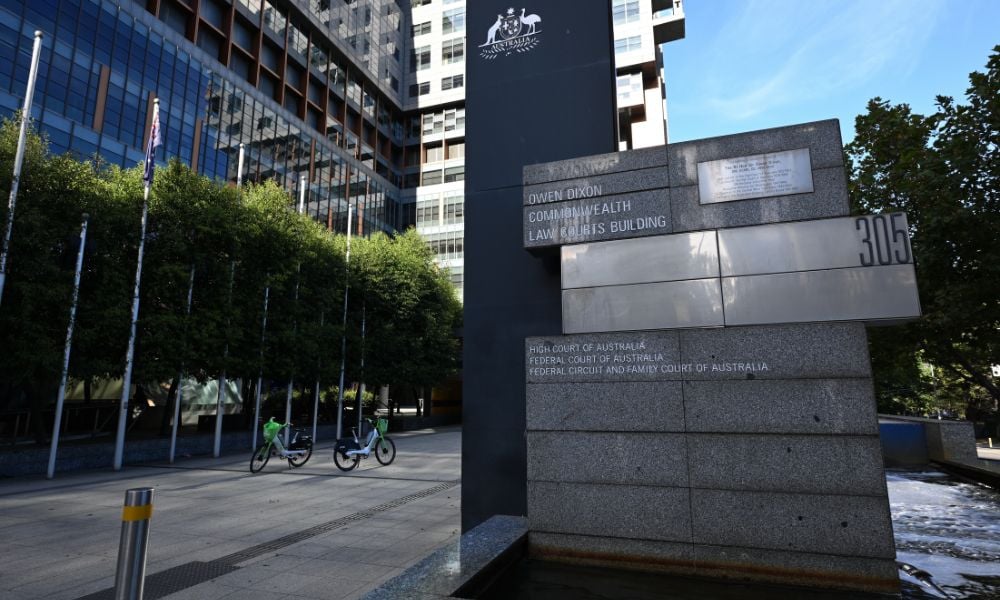
Judge sets 10-year publication ban over some identities and confidential information

In proceedings commenced by the eSafety Commissioner against Telegram FZ-LLC and Telegram Messenger Inc, the Australian Federal Court issued pseudonymity and non-publication orders to keep certain individuals safe and to prevent prejudice to the proper administration of justice.
eSafety Commissioner v Telegram FZ-LLC (suppression orders) [2026] FCA 1700 concerned the Online Safety (Relevant Electronic Services – Class 1A and Class 1B Material) Industry Standard 2024 (Cth) (RES Standard), promulgated under s 145(1) of the Online Safety Act 2021 (Cth).
Seeking declarations and pecuniary penalties, the applicant commissioner claimed breaches of the RES Standard that allegedly constituted contraventions of s 146(1) of the Online Safety Act.
According to the commissioner, the contravening conduct facilitated access to or the distribution of class 1A material, defined in s 6(1) of the RES Standard as including “pro-terror material” or “extreme crime and violence material.”
In her statement of claim, the commissioner asserted that end-users in Australia:
The commissioner argued that the relevant Telegram entity failed to:
In the present proceeding, the applicant commissioner asked for pseudonym orders based on witness safety considerations and the need to prevent prejudice to the proper administration of justice in connection with the commissioner’s:
The commissioner relied on the affidavits of:
The commissioner also requested non-publication orders over portions of Ms Snell’s affidavit and over the CEO’s entire affidavit.
The Federal Court made the requested orders with some adjustments.
According to the court, the orders would help protect the safety of individuals under s 37AG(1)(c) of the Federal Court of Australia Act 1976 (Cth) and prevent prejudice to the proper administration of justice under s 37AG(1)(a) of the Federal Court of Australia Act.
Upon considering the affidavit evidence, the court issued orders to refer to the employer company as “company Y,” to refer to its CEO as “Mr X,” and to refer to the two proposed witnesses as “Person A” and “Person B.”
The court then imposed a 10-year prohibition over:
Lastly, the court reserved the issue of costs.
In late July, the eSafety Commissioner announced the commencement of civil penalty proceedings before the Federal Court against Telegram’s provider based on its alleged failure to detect and remove pro-terror material from the platform, including videos of terrorist executions and mass shootings.
On 21 May 2026, the Federal Court of Australia ordered X Corp, which operated the social media service formerly known as Twitter, to pay $650k to the Commonwealth of Australia as a pecuniary penalty and $100k as a contribution to the eSafety Commissioner’s costs.
Enjoy this story? Read the latest TMT (telecoms, media, technology) law news on the main page!