New judge won’t disturb evidentiary rulings made, exhibits tendered
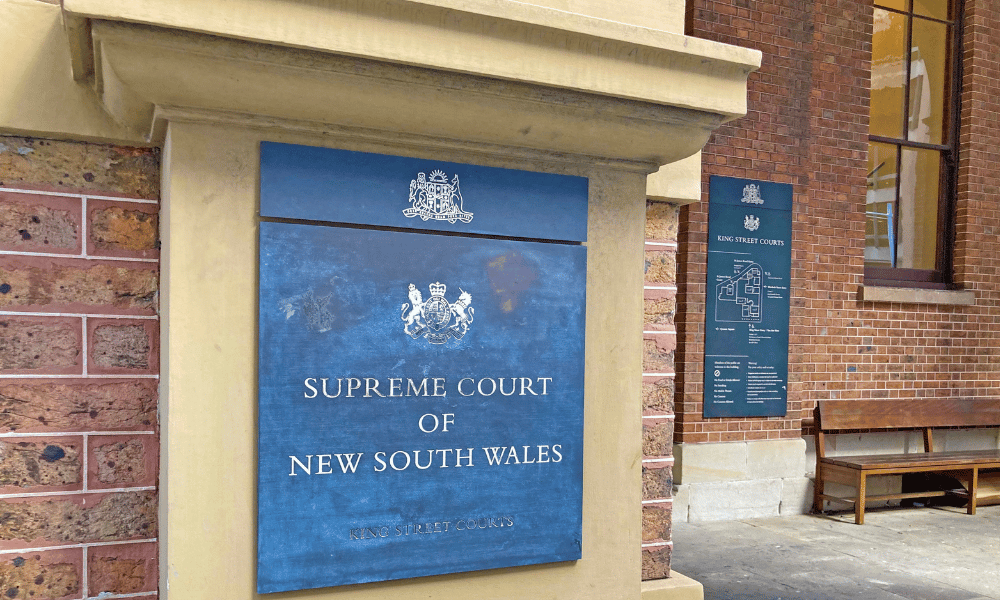
Upon the recommencement of the proceeding, the New South Wales Supreme Court directed a hearing de novo, apart from the previous judge’s evidentiary rulings on objections to the parties’ affidavits and the receipt of physical exhibits tendered before that judge.
The case was V2V Investment Pte Ltd v Green Estate Australia Pty Ltd [2026] NSWSC 1135. In March and August 2026, Black J presided over around eight days of hearings and read all the parties’ affidavit evidence.
On 27 August 2026, upon a party’s application, Black J disqualified himself from hearing the matter. On 31 August 2026, the chief judge in equity allocated the matter to Harrison AJ for hearing, listed for an estimated 10 days beginning on 12 October 2026.
The parties agreed that Black J’s rulings on objections to the affidavits should stand and that the physical exhibits tendered before him should remain exhibits in the evidence.
However, the parties disputed the approach to the proceedings, given the history thus far. Specifically, the parties disagreed on whether Harrison AJ:
Section 89 of the Civil Procedure Act 2005, which anticipated either possibility or a combination of both, applied.
Upon the resumption of the matter on 12 October 2026, Harrison AJ of the NSW Supreme Court ordered a hearing de novo, except for Black J’s evidentiary rulings on objections to the affidavits and the receipt of physical exhibits tendered before him.
According to Harrison AJ, such an order would considerably reduce the time for hearing the proceedings. Harrison AJ added that listing the matter for directions before the scheduled start date might be advantageous to address any administrative loose ends in a timely manner.
In the decision, Harrison AJ emphasised the importance of ensuring a fair trial, as well as expeditious litigation without undue delay or expense, for all parties when choosing the format for further proceedings.
Harrison AJ acknowledged that a hearing de novo would waste the previous hearing days and the associated costs.
However, based on prior experience both as a judge and as a practising barrister, Harrison AJ explained that repeating the cross-examination as needed nearly always took less time because, by that point:
Stressing the importance of demeanour, Harrison AJ would feel more comfortable comparing the witnesses for both sides to recognise truth and to detect dishonesty, rather than relying solely on transcripts of what they had said.
Harrison AJ was not especially concerned with the likelihood that a hearing de novo would result in undue preoccupation with the witnesses’ previously recorded answers. Harrison AJ noted that a witness telling the truth would not need to recall what they had said before.
Here are some other recent decisions by the Supreme Court of New South Wales.
On 2 September 2026, the NSW Supreme Court declined leave to appeal under s 89(1)(b) of NSW’s Legal Profession Uniform Law Application Act against a costs assessment review panel’s allowance of a law firm employee’s work at higher hourly rates.
In a dispute involving the costs of a solicitor who acted in a personal injury proceeding, the NSW Supreme Court’s Court of Appeal issued a 28 August 2026 decision remitting the consideration of whether the costs were fair and reasonable to the District Court.
Enjoy this story? Read the latest litigation and dispute resolution news on the main page!