Responsible AI use will be driven by education and empowerment, the Thomson Reuters director says
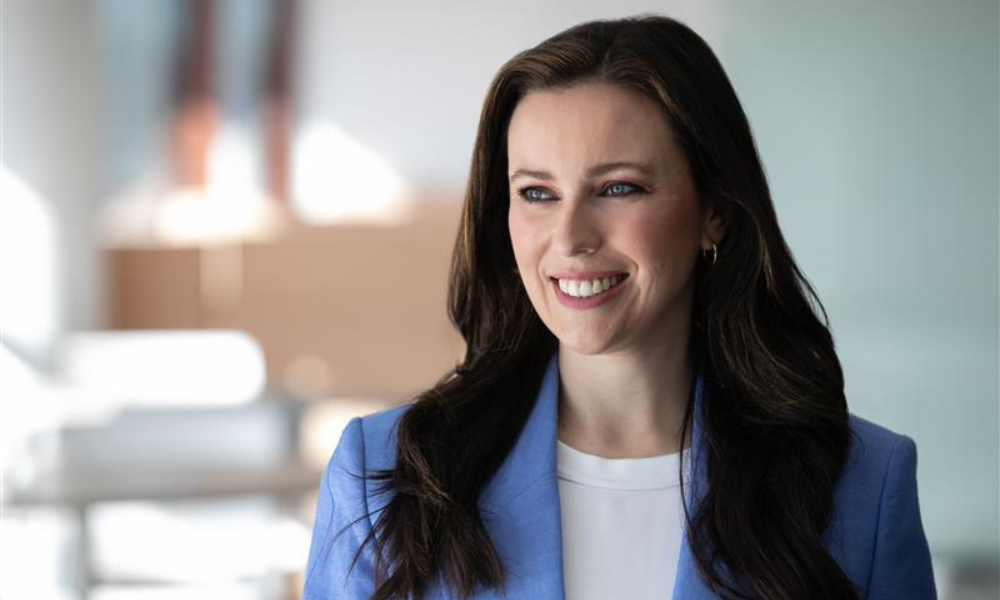
For Tyrilly Csillag, the legal profession’s biggest challenge – in both private practice and in-house – is legal professionals getting the chance to learn and play around with AI tools, which hinders their ability to grasp the value of AI.
Earlier this week, the Thomson Reuters director of legal transformation shared her passion for helping lawyers realise technology’s time-saving potential. In the second part of this March interview, Csillag talks the long-term transformative advantages of AI.
What should the profession focus on more?
Digital Transformation: A crucial investment for all legal teams as they look to future-proof the profession. The legal transformation journey unfolds in three interconnected dimensions: the people, the technology that empowers them, and the organisation that stands to benefit from the new efficiencies. As the complexities of business continue to rise, Thomson Reuters is committed to automating mundane tasks, delivering real-time insights, and driving efficiencies so that our customers can get back to the work that inspired them to be a lawyer in the first place.
Education: The CPD year rolls around on 31 March, and I am encouraging everyone I know to get their CPD points! Now is the time to double down on learning about GenAI and how it will impact the legal profession, both today and into the future. Customers rely on Thomson Reuters content and technology to navigate the rapidly changing and increasingly complex digital world. As a lawyer, having trusted insights at your fingertips and investing in your skills will be crucial to success.
What challenges are particularly pressing in the country’s legal industry?
I believe the greatest challenge for the Australian legal industry is ensuring that professionals are given the opportunity to learn and experiment with trusted AI tools to understand their value. It is this education and empowerment that will lead to the confident and responsible use of the technology going forward. Redesigning the way value is measured is part of this process and something that both law firms and in-house legal teams are grappling with.
What are your thoughts on new tech and its impact on the legal profession?
In my role, I get the pleasure of collaborating with our customers, who represent lawyers across multiple industries, geographies, and specialisations. The majority (78%) view AI as a force for good, recognizing its potential to enhance efficiency and bring new value to their work. It is through this network that I am able to watch the power of the interconnected Thomson Reuters ecosystem at play – and it is game-changing.
There is a real push within in-house teams to leverage technology in a way that not only streamlines their workflows but also feeds data insights back into the business to inform strategic decisions. This is a huge opportunity yet to be explored by some in-house teams.
What are you looking forward to the most in the coming year?
At Thomson Reuters, our vision for generative AI is centered on our customers. We’re focused on providing cutting-edge solutions that enable professionals to work faster and smarter, reflecting their needs today and preparing them for tomorrow. Our investment of more than US$200 million annually for the next few years is focused on integrating responsible AI into our flagship content and technology solutions.
While some advantages of GenAI are immediately measurable, others are transformative in the longer term including secondary innovations, like new products and services, and far-reaching societal changes to the way that we live and work.
It’s the profound impact of those longer-term benefits that are now starting to be realised by our early GenAI adopter customers that I am most excited about. The benefit of those learnings can then be shared with the rest of the industry to help bring their legal practices up to speed. Those who wait until next year to adopt AI will be the laggards, and I haven’t yet met a lawyer who wants the label of being in that group!