Ruling notes he was experienced in self-representing himself in proceedings
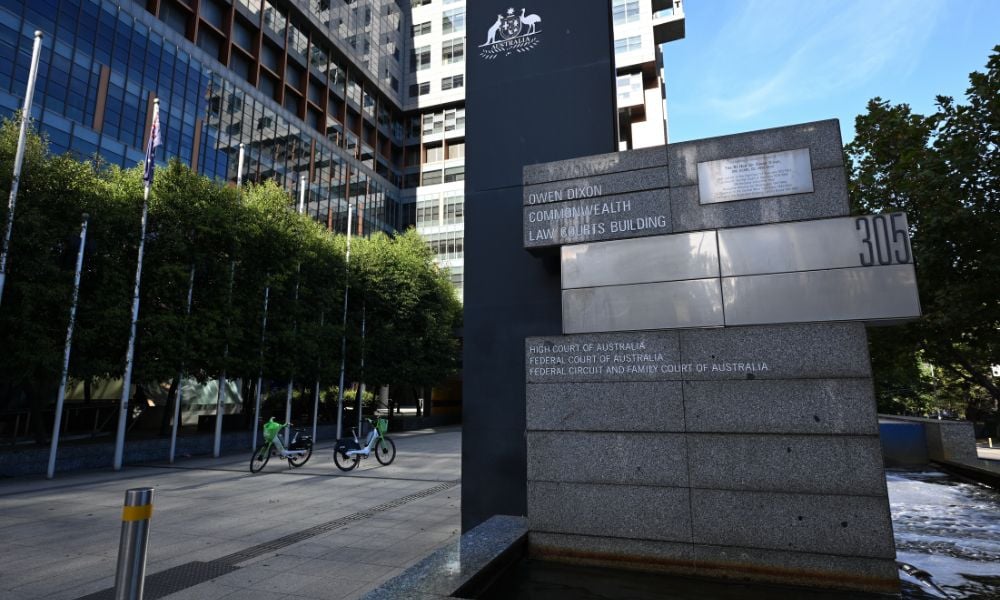
Australia’s Federal Court denied an application by a sole director of Du Bray & Associates Ltd (DBNZ), a corporation incorporated in New Zealand, to dispense with compliance with r 4.01(2) of the Federal Court Rules 2011 (Cth).
In Du Bray & Associates Limited v Du Bray and Associates Pty Ltd (In Liquidation) [2026] FCA 849, DBNZ was the applicant, while Du Bray and Associates Pty Ltd (DBA) was the Australian corporate respondent, which was in liquidation.
In a claim against DBA’s liquidators, DBNZ alleged that the liquidation could not apply to an amount of $353,973.72 that Wise Australia Pty Ltd held on deposit in DBA’s name and transferred to the liquidators on or about 28 August 2025, as it was a chose in action held on express trust for DBNZ and was thus not DBA’s property.
DBNZ asserted that monies due from DBNZ’s creditors were directed to be paid into the Wise accounts of DBA as DBNZ’s express secret trustee to avoid the impact of freezing orders issued in the New Zealand High Court. The liquidators denied the claim.
DBNZ’s sole director sought to keep representing DBNZ in this proceeding that he commenced without appointing a lawyer contrary to r 4.01(2) of the Federal Court Rules. In support of his waiver application, the director submitted that:
The director also contended that he:
The director also argued that no Australian lawyer:
The Federal Court of Australia did not consider it appropriate to grant the director’s application to dispense with compliance with r 4.01(2) of the Federal Court Rules.
The court saw some complexity in the issue of whether DBNZ and DBA could settle an express trust to circumvent freezing orders issued by the High Court of New Zealand. The court also found a possible question of whether the director engaged in a fraudulent scheme.
The court acknowledged that the director showed the following, which favoured the granting of his application:
However, the court had no confidence that the director could present DBNZ’s case with a legal practitioner’s objectivity and independence.
The court could not find that the asserted insufficient financial capacity would hamper the proceeding. According to the court, other than his affidavit’s conclusory statements, the director did not give evidence of his or DBNZ’s assets and liabilities, including a recent statement of financial accounts or bank statements.
The court explained that the director’s bankruptcy on 16 July 2020, upon his previous de facto partner’s application, and discharge on 17 November 2024 did not constitute evidence of his insufficient means at present.
Next, the court ruled that the director’s intimate involvement as the actor responsible for the secret trust would prevent him from objectively presenting the case with an independent mind and therefore heavily counted against allowing him to represent DBNZ.
Relatedly, the court deemed it highly probable that the director would be a witness in the proceeding. If he would be a witness for and the advocate of DBNZ, the court would see a potential conflict between his personal interests and the need for an objective presentation of the case.