Ruling finds director knew letter-of-credit funds promised to contractor had already gone to other parties
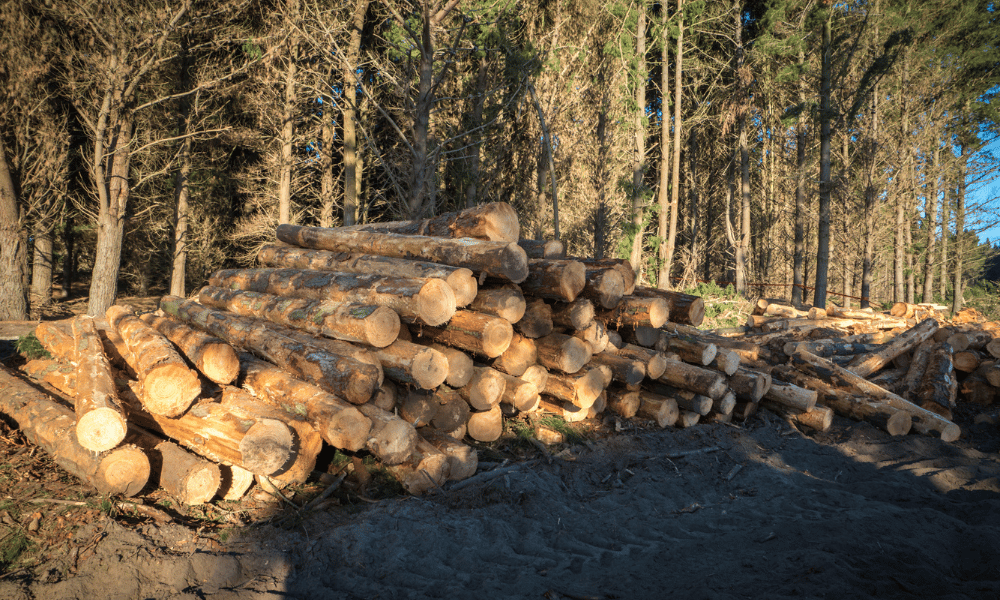
The High Court has ordered the sole director of an insolvent forestry business to personally pay its harvesting contractor $1.39 million for reckless trading.
In Tramroad Ltd v Guru NZ Forests Ltd (in liquidation) [2026] NZHC 3324, released 27 October 2026, the court granted summary judgment against the director for breaching ss. 135 and 136 of the Companies Act 1993 (the Act). Those provisions bar reckless trading and agreeing to obligations without reasonable grounds to believe the company can meet them.
Tramroad Limited (Tramroad) harvested a plantation in Pauanui for Guru NZ Ltd (Guru NZ) in mid-2024. A contract dated 9 September 2024 then required Guru NZ and a related company, Guru NZ Forests Limited (Guru Forests), to pay Tramroad $1,247,454.96. The payment plan relied on an initial $60,000, 70 percent of money due under two letters of credit from China Construction Bank, and half the net proceeds of Guru Forests’ property sales.
Tramroad received the $60,000 and $200,000 from one property sale. It recovered nothing from the letters of credit, even though Guru NZ collected $439,318.70 under them. Bank records showed that Guru NZ had already received 56 percent of that total before it signed the contract.
The court found that Guru NZ was insolvent when it engaged Tramroad and when it entered the contract. A forensic accountant’s report showed that Guru NZ’s liabilities exceeded its assets by $4.39 million on the contract date.
The court held that the director caused or allowed the company to trade in a way likely to create a substantial risk of serious loss to creditors, as there was “no realistic prospect of paying Tramroad.” It also found that he lacked reasonable grounds to believe that Guru NZ could meet its obligation to Tramroad. The court said he was aware that the letter-of-credit funds had already gone to other parties and that the property sales offered no reasonable prospect of covering the balance.
Applying the Supreme Court’s decision in Yan v Mainzeal Property and Construction Ltd (in liq) [2023] NZSC 113, the court held that s. 301 of the Act allowed Tramroad to claim its losses directly from the director. It ordered him to pay $1,394,944.30: $987,454.96 in principal, $245,841.28 in simple interest at 12 percent, $104,482.22 in penalty interest at 18 percent, and $57,165.84 in enforcement costs.
The court rejected Tramroad’s bid for compound interest. It found that the contract’s definition of “Debt” covered only the amounts outstanding at signing, not later interest.
The director became bankrupt in February 2026 and did not appear. The Official Assignee did not oppose the application.