Judge denies recusal request of former practitioner who was deemed bankrupt
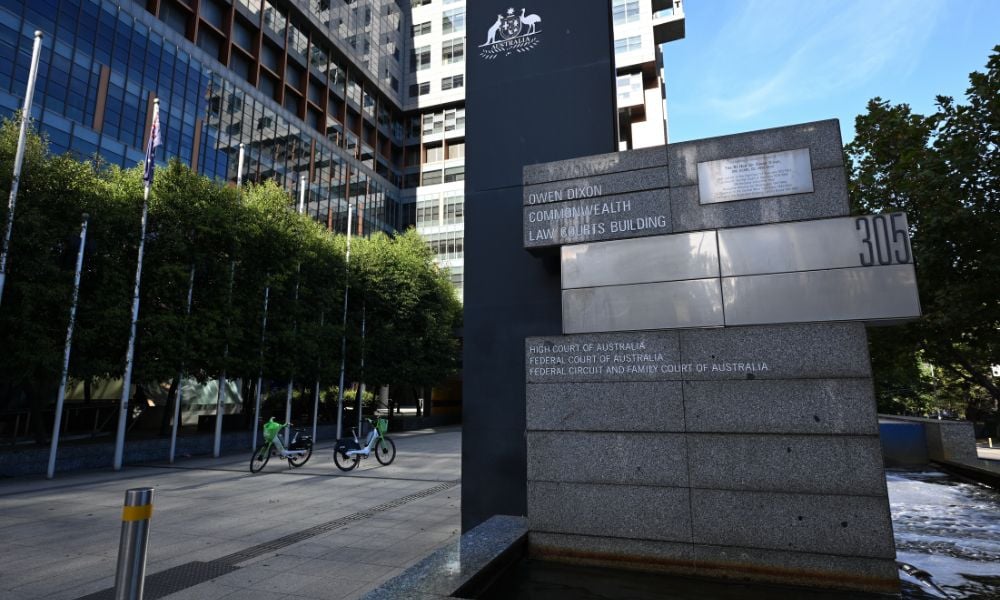
In a proceeding involving the Legal Practice Board of Western Australia’s (LPBWA) refusal to renew the respondent’s legal practising certificate, the Australian Federal Court affirmed a sequestration order over his estate, such that he was a bankrupt.
On 4 February 2026, the Supreme Court of Western Australia refused a fourth adjournment in the proceeding arising from the Legal Services and Complaints Committee’s application to remove the respondent from the roll of practitioners under s 23(1)(c) of the Legal Profession Uniform Law (WA).
At the petition of the LPBWA as a creditor, a Federal Court registrar ordered the sequestration of the estate of the respondent in Legal Practice Board v Khosa [2026] FCA 1059.
The respondent applied to review the registrar’s decision. To oppose the bankruptcy petition, he alleged that the LPBWA engaged in conduct:
The respondent then applied for Justice Darren Jackson of the Federal Court to recuse himself for apprehended bias.
The Federal Court upheld the registrar’s 6 March 2026 orders upon determining that the LPBWA established the matters in s 52(1) of the Bankruptcy Act 1966 (Cth), which enlivened the court’s power to issue a sequestration order against the respondent’s estate.
The court dismissed the respondent’s recusal and review applications.
According to the court, the LPBWA’s reasonable costs incurred in the review application were the bankruptcy costs, to be taxed if not agreed and payable pursuant to s 109(1)(a) of the Bankruptcy Act.
First, regarding his membership in the Legal Profession Complaints Committee, Justice Jackson saw no logical connection between the respondent’s matter and any apprehended deviation from ruling on the legal and factual merits. The judge noted that he had nothing to do with the respondent’s matter.
Second, regarding Justice Jackson’s role as a director and chair of Francis Burt Chambers when the barrister who made the initial complaint was simultaneously a member of the large chambers, the judge described his professional association with that barrister as remote.
The Federal Court rejected the respondent’s four grounds to oppose the bankruptcy petition.
First, the court found no conduct constituting an abuse of office and/or power. Assuming that the LPBWA did defer renewal of the respondent’s practising certificates when it lacked the power to do so, the court saw no basis in the evidence that LPBWA sought to exert influence on the respondent.
Second, the court held that LPBWA did not mislead the State Administrative Tribunal by permitting the ink dating report to stand. The court rejected the respondent’s argument that the LPBWA’s failure to withdraw the report meant that the tribunal’s final decision and costs order was the consequence of such fraud, collusion, or miscarriage of justice as to justify going behind the costs order.
Third, the court described the discrimination claim against LPBWA as scandalous and lacking in substance. The court saw no rational basis to allege that the respondent’s and a doctor’s similar ethnic background was a part of the reason to require the doctor to provide evidence at the tribunal.
Fourth, given that it rejected the respondent’s other claims about LPBWA’s conduct, the court found no conduct warranting an indemnity costs order.
Here are some other decisions by the Federal Court of Australia.
The Federal Court made a 22 July 2026 decision awarding an applicant lump sum costs of $1,000 upon finding that the respondent failed to appear at a hearing because its counsel could not maintain a reliable, continuous video or audio link throughout the hearing.
The Federal Court issued a 24 June 2026 decision staying the enforcement of an order for the applicant to pay $36,458,048.44 on his undertaking to pursue the appeal expeditiously and to refrain from dealing with certain assets.
Enjoy this story? Read the latest restructuring and insolvency law news on the main page!