Judge sought to disallow future video attendance if counsel could not keep reliable connection
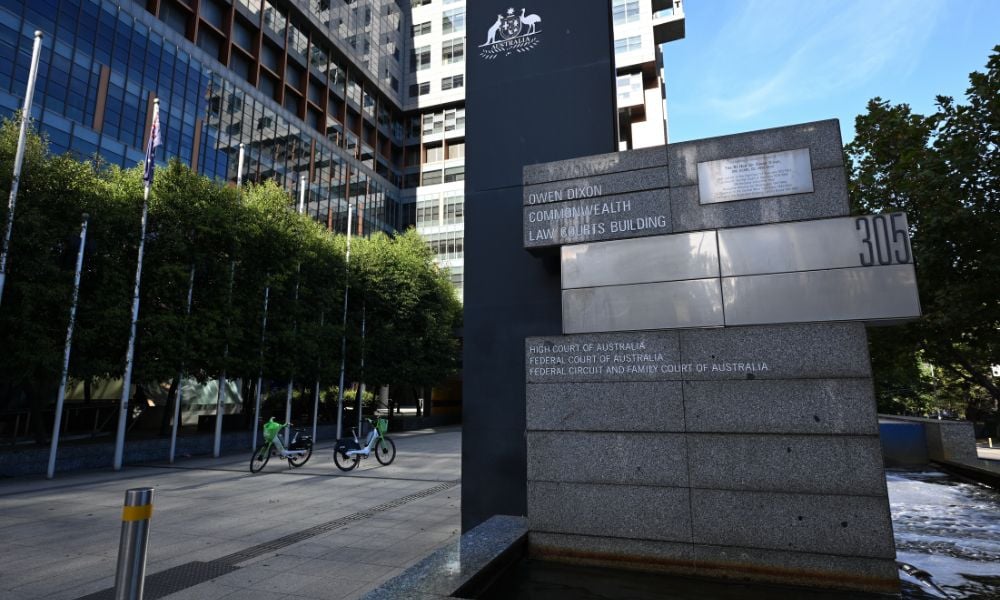
The Australian Federal Court awarded the applicant lump sum costs of $1,000 upon finding that the respondent failed to appear at a hearing because its counsel could not maintain a reliable, continuous video or audio link throughout the hearing.
Under the National Court Framework and Case Management Practice Note (CPN-1), the court listed the first case management hearing in Sunche Pty Ltd v Roll'd Australia Pty Ltd [2026] FCA 977 for 29 May 2026 in the Western Australian District Registry.
By an email on 25 May 2026, the respondent’s legal representatives requested leave for the respondent’s counsel in New South Wales to appear by telephone. The court provided a Webex meeting link and telephone number for the respondent’s counsel to establish a video or audio link.
While at another court hearing and not in an office, the respondent’s counsel apparently attempted to establish a video link via a mobile telephone instead of through a computer with an internet connection. This initial difficulty caused a delay in calling the case management hearing.
After the link’s establishment and the matter’s calling for the hearing, the applicant’s representative, the applicant’s counsel, and an instructing solicitor attended personally, while the respondent’s counsel appeared via video link.
The presiding judge asked the parties to provide their submissions on the nature of the disputed issues and the judicial and administrative resources likely needed to resolve such issues. During the applicant’s submissions, the video link of the respondent’s counsel disconnected.
For some time, the court adjourned the hearing to re-establish a video or audio link with the respondent’s counsel. Upon a reconnection between the respondent’s counsel and the court, the hearing resumed.
The judge told the respondent’s counsel that the respondent could not attend by video link in the future if he could not maintain a reliable connection. The link of the respondent’s counsel again disconnected.
The presiding judge issued orders based on the parties’ minute of proposed consent orders, adjourned the first case management hearing, and reserved the issue of costs. The parties filed written cost submissions.
In a judgment dated 22 July 2026, the Federal Court ordered the respondent to pay a lump sum of $1,000 for the applicant’s costs of the aborted first case management hearing.
The court considered this amount of lump sum costs appropriate, given the inevitable wasted preparation for and attendance at the hearing, as well as the court’s request and expectation that counsel briefed should attend with the most senior instructing solicitor.
The court ruled that the respondent failed to provide any reasonable explanation or excuse for its counsel’s insufficient and failed appearance via video or audio link.
First, the Federal Court disagreed with the respondent’s arguments that it was not liable for the applicant’s costs because the court ultimately issued consent orders and thus no material prejudice arose from its failure to meaningfully appear.
The court explained that the failure to meaningfully appear prevented the achievement of the aims of a first case management hearing, as stated in CPN-1.
Subject to the settlement of the proceeding, the court deemed it necessary to relist and conduct a first case management hearing to ensure that the case management appropriately allocated and utilised the court’s judicial and administrative resources.
Second, the court rejected the respondent’s assertion that the respondent had to attend via mobile telephone, given the unavailability of the legal practitioner with carriage of the matter at short notice due to personal circumstances and the respondent’s counsel’s pre-existing commitments at a New South Wales court hearing.
The court saw no affidavit evidence to support the respondent’s submission. The court added that the respondent’s argument did not excuse a failure to meaningfully appear.
The Federal Court of Australia emphasised the responsibility of the party requesting a video or audio link to ensure adequate and appropriate facilities to establish that link.
According to the court, upon counsel’s unavailability, a party unable to attend could apply for an adjournment before the hearing date, seek the opposing party’s consent to an adjournment, or brief alternative counsel to appear on their behalf in person or via a reliable video or audio link.
Enjoy this story? Read the latest litigation and dispute resolution news on the main page!