Court held that the relevant time for assessing the defence is the date of each alleged infringement

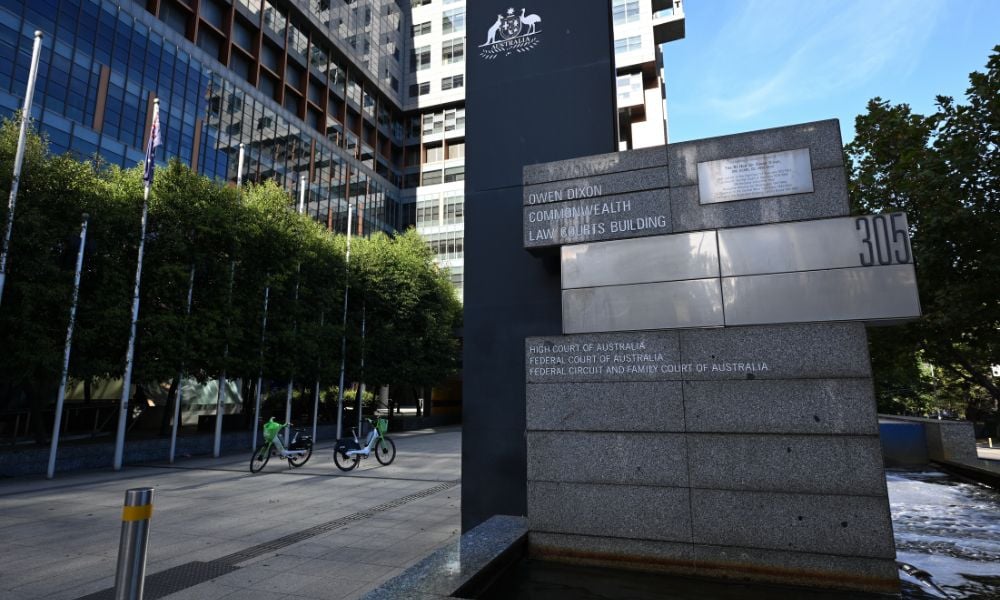
The High Court has dismissed an appeal brought by Zip Co Limited in a trade mark dispute with non-bank lender Firstmac Limited, clarifying the operation of the “honest concurrent use” defence under the Trade Marks Act.
Firstmac’s corporate group is described as the country’s largest lender outside the banking sector. Over the past four decades, Firstmac has issued more than 100,000 home loans and currently oversees approximately $12 billion in mortgages and $250 million in cash investments. The trade mark dispute concerned Firstmac’s registered trade mark “ZIP”, which it registered in 2004 for “financial affairs (loans)” in Class 36.
The founders of Zip Co began using marks containing the word “ZIP” in 2013 in connection with consumer credit products including “Zip Money” and “Zip Pay”. Firstmac alleged that the use of those marks infringed its registered trade mark under s. 120(1) of the Trade Marks Act.
The central issue before the High Court was whether the Zip Companies, which includes Zip Co and Zipmoney, could rely on statutory defences of honest concurrent use under s. 122(1)(f) and s. 122(1)(fa), read with s. 44(3) of the Trade Marks Act. Those provisions permit a defence where a party could have obtained registration of a substantially identical or deceptively similar trade mark because of honest concurrent use.
At first instance, the Federal Court held that the founders of Zip Co had established those defences. The trial judge found that the companies had honestly adopted and used the ZIP marks and that registration would likely have been permitted under s. 44(3). The full court of the Federal Court later overturned that finding, concluding that the companies had failed to establish honesty from the time of first infringement from November 2013.
The High Court upheld the full court of the Federal Court’s decision. The High Court held that the relevant time for assessing the honest concurrent use defence is the date of each alleged infringement, not the date of trial or the filing of a defence as asserted by Zip Co. The court rejected Zip Co’s argument that honesty should be assessed at a later stage in the proceedings.
In addressing the meaning of “honest” in s. 44(3)(a), the High Court held that honesty must be assessed by reference to the standards of ordinary, decent people. The inquiry requires examination of the alleged infringer’s state of mind, including their knowledge, beliefs and intentions at the relevant time.
The High Court examined evidence relating to the conduct of Zip Co founders. The founders adopted the ZIP branding in 2013 without knowledge of Firstmac’s registered mark. However, in October 2013, IP Australia issued adverse examination reports warning that the proposed “ZIP” and “ZIP MONEY” marks closely resembled Firstmac’s earlier registered mark and related to similar financial services.
Despite receiving those reports, the Zip Companies proceeded to launch and use the marks from November 2013. The High Court noted evidence that the founders gave the reports only cursory attention and did not seek legal advice before continuing to use the branding. The companies later filed further trade mark applications and initiated unsuccessful non-use proceedings against Firstmac’s mark.
The High Court held that the Zip Companies failed to positively establish honesty once they became aware of the potential conflict with the Firstmac mark. The High Court accepted that knowledge of an earlier trade mark does not automatically defeat a claim of honest concurrent use. However, it found that the evidence did not establish that the companies honestly believed confusion would not arise or that they had adequately addressed the risk identified in the adverse examination reports. Ultimately, the High Court dismissed Zip Co’s appeal.