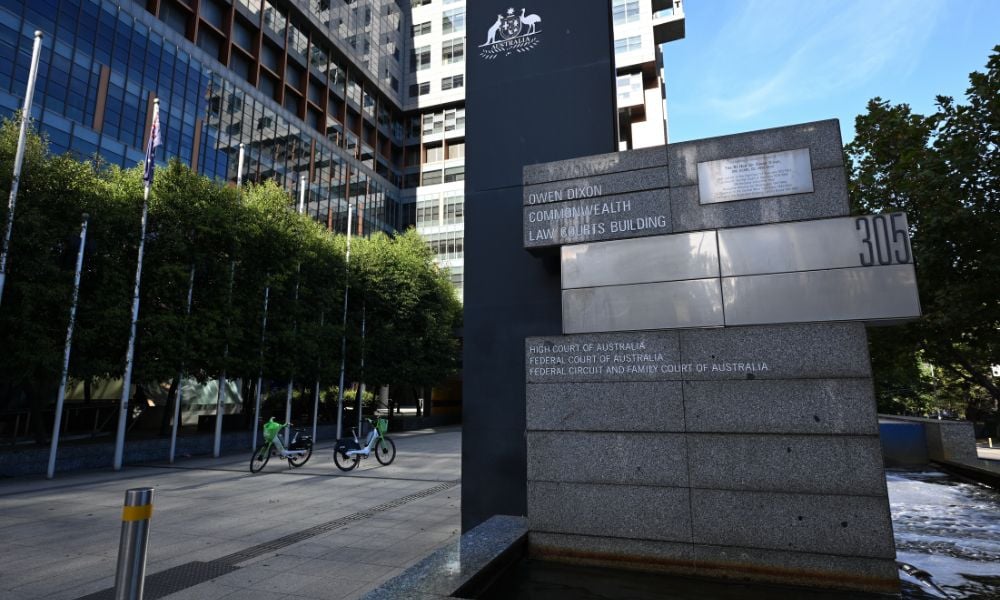
Newcastle developer's shot at port giants gets fresh life after High Court ruling

The High Court has unanimously allowed Mayfield Development Corporation's appeal, ruling derivative Crown immunity does not shield NSW Ports from competition law claims.
In Mayfield Development Corporation Pty Ltd v NSW Port Operations Hold Co Pty Ltd [2026] HCA 12, Chief Justice Gageler and Justices Gordon, Edelman, Gleeson, and Beech-Jones delivered judgment on 6 May 2026, overturning decisions of the Federal Court and Full Federal Court that had blocked Mayfield's claim under sections 45 and 45DA of the Competition and Consumer Act 2010 (Cth).
Mayfield claims it lost the opportunity to develop land at the Port of Newcastle as a container facility because, in 2013, the State of New South Wales agreed to Port Commitment Deeds (PCDs) with NSW Ports during the privatisation of Port Botany and Port Kembla. Clause 3 of the PCDs included compensation provisions requiring the State to pay NSW Ports if Port Botany or Port Kembla were not at full capacity in two consecutive financial years and container volumes beyond a defined threshold were diverted from Port Botany or Port Kembla to the Port of Newcastle. The PCDs have a term of 50 years.
The Australian Competition and Consumer Commission had previously brought a similar claim against NSW Ports, which failed in the Federal Court at first instance and on appeal. Mayfield was granted leave to intervene in the ACCC appeal on terms limited to filing 15 pages of written submissions, made no oral submissions and did not participate in the trial.
In this proceeding, NSW Ports and the State again advanced derivative Crown immunity, and additionally argued that a Deed of Release executed on 24 December 2013 barred Mayfield from suing, that Mayfield was estopped by its intervention in the ACCC proceeding, and that the proceeding was an abuse of process. Three separate questions were stated for determination. The primary judge, McElwaine J, held that Mayfield's intervention did not preclude the proceeding and that the Deed of Release did not bar it, but considered himself bound to follow the Full Federal Court majority in the ACCC appeal on derivative Crown immunity. The Full Federal Court (Lee, Colvin, and Stewart JJ) dismissed Mayfield's appeal, finding the earlier reasoning was not plainly wrong.
Justices Gordon, Gleeson, and Beech-Jones rejected each of the respondents' contentions. The Deed of Release did not apply because Mayfield's claims target NSW Ports, not the State. They emphasised that the release applies only to claims "against" the State, and the State's status as a party – necessitated by the potential operation of section 4L of the CCA – does not transform the proceeding into a claim against it.
On issue estoppel, the joint judgment found Mayfield did not have "a fair and full opportunity to contest" the issue in the ACCC appeal. The intervener's role under the Federal Court Rules functions in the nature of an amicus curiae, and Mayfield could not exercise control over the presentation of evidence or the shaping of issues at trial. Nor did the proceeding constitute an abuse of process.
On the substantive issue, the court held the Ports Assets (Authorised Transactions) Act 2012 (NSW) conferred no more than "an authority and capacity to contract" on the Treasurer. Applying Australian Competition and Consumer Commission v Baxter Healthcare Pty Ltd, the joint judgment confirmed that the Crown's freedom to contract does not constitute a legal right or interest sufficient to engage derivative Crown immunity.
Justice Edelman, in separate reasons, described "derivative Crown immunity" as a misnomer – "not derivative, not an immunity, and not concerned with a single Crown" – while reaching the same conclusion. Chief Justice Gageler also wrote separately. The appeal was allowed with costs, the cross-appeals dismissed, and the matter remitted to the primary judge for further determination.