
Ruling accepts that medical evidence would not have changed outcome
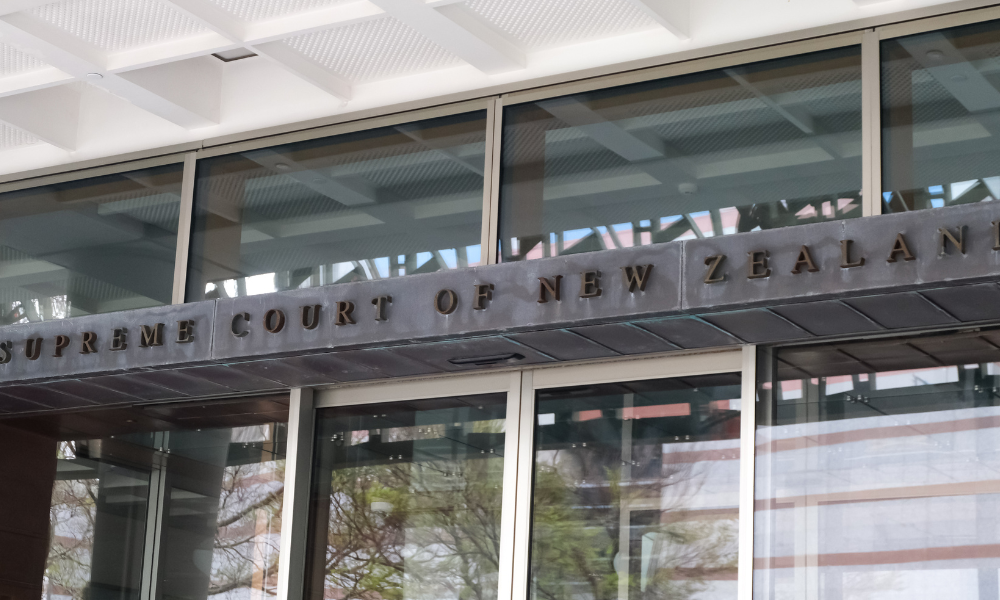
New Zealand’s Supreme Court has deemed it unnecessary in the interests of justice to hear and determine a proposed appeal in a case where decision-makers repeatedly denied an applicant’s request to order a coronial inquiry into his mother’s death.
In Whittington v Solicitor-General, [2025] NZSC 107, the acting deputy solicitor‑general declined to order a coronial inquiry concerning this death, and the deputy solicitor‑general confirmed the refusal upon the applicant’s challenge.
The applicant applied for a judicial review. In May 2024, the High Court dismissed the application upon finding the refusal decisions reasonable, lawful, and valid. Before the Supreme Court, the applicant directly asked for leave to appeal the High Court’s judgment.
In August 2024, the Supreme Court decided that the proposed appeal raised no issues of general or public importance, no risk of a miscarriage of justice in the civil context, and no exceptional circumstances justifying a direct appeal.
Before the Court of Appeal, the applicant applied for an extension of time to appeal the High Court’s judgment. The appeal court denied the application upon noting that:
Before the Supreme Court, the applicant applied for leave to appeal the appeal court’s decision. He alleged that the appeal court:
The Supreme Court of New Zealand dismissed the application seeking leave to appeal and ordered the applicant to pay $1,500 in costs.
The Supreme Court ruled that the proposed appeal failed to raise a matter of general or public importance, a risk of a substantial miscarriage of justice in the civil sense, and evident error in the appeal court’s reasoning.
The Supreme Court held that the appeal court had assessed the application using the settled principles in Almond v Read, [2017] NZSC 80. The Supreme Court added that the other decision-makers adequately addressed the issues raised in the applicant’s various applications.
The Supreme Court acknowledged that the appeal court did not discuss the evidence of a medical basis for the filing delay. However, the Supreme Court agreed with the solicitor-general that the medical evidence would not have impacted the outcome, even if entirely accepted.
The Supreme Court noted that the applicant filed a “leapfrog” application before the expiry of the period under the Court of Appeal (Civil) Rules, which suggested that any medical condition would not have prevented him from timely appealing.
The Supreme Court expressed sympathy toward the applicant and acknowledged his genuine concern regarding the circumstances of his mother’s death.




