Case arose from request for certificate of character to seek admission as barrister and solicitor
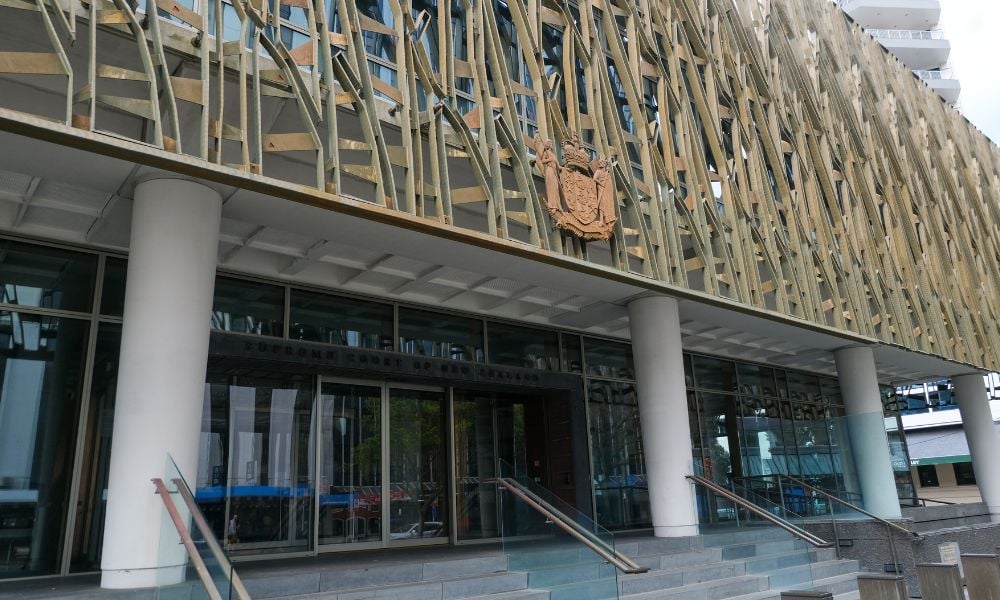
New Zealand’s Supreme Court has confirmed that absolute privilege protected communications to the New Zealand Law Society as part of its enquiries on whether to issue a certificate of character for an application seeking admission as a barrister and solicitor.
In Jindal v Daruwalla, [2025] NZSC 98, the applicant finished his law degree in July 2020 and applied to the law society (Te Kāhui Ture o Aotearoa) in August 2020 for admission as a High Court barrister and solicitor.
After the law society started enquiring, the respondent sent the first set of emails, dated 1 May 2020 and 6 November 2020, to the liquidator of a company where the applicant served as a director.
The respondent sent the second set of emails, dated 16 November 2020 and 17 November 2020, to the law society. The law society refused to issue a certificate of character, which delayed the application for admission.
The applicant learned about all the emails on 20 April 2021. His initial statement of claim – timely filed on 22 November 2022 – was based on the two law society emails. On 1 March 2023, he brought an amended statement of claim, which added a claim based on a LinkedIn statement about which the applicant learned in February 2023.
On 21 April 2023, consent orders permitted the claim’s amendment. On 24 April 2023, the applicant filed a “First Amended Statement of Claim,” backdated to 9 March 2023 and including the two liquidator emails.
Requesting declaratory relief and damages, the applicant alleged that the emails sent by the respondent defamed him. The respondent applied to strike out a portion of the applicant’s claim.
New Zealand’s High Court struck out two causes of action upon finding them not reasonably arguable and barred by the Limitation Act 2010. The court also determined that the respondent had a complete defence since absolute privilege applied to two other causes of action.
New Zealand’s Court of Appeal dismissed the applicant’s appeal upon considering the applicant’s claims regarding the liquidator emails untimely and correctly struck out.
The appeal court made the following findings:
The appeal court deemed these findings consistent with the public policy underlying absolute privilege.
“In the context of the Law Society’s disciplinary jurisdiction, it is well established that the public policy that the law should provide a remedy to a person who is maliciously defamed should yield to the need for persons to give their testimony about the conduct of a barrister or solicitor without fear of action against them, whether their testimony is true or false,” the appeal court said.
The applicant requested leave to appeal the appeal court’s decision.
The Supreme Court of New Zealand granted the application for an extension of time to apply for leave to appeal, dismissed the application for leave to appeal, and ordered the applicant to pay the respondent costs of $2,500.
The Supreme Court found insufficient prospects of success in the applicant’s proposed arguments concerning the Limitation Act and the liquidator emails. The Supreme Court saw no apparent miscarriage of justice and no question of general or public importance or of general commercial significance.
The Supreme Court noted that the parties accept that the late knowledge period under the Limitation Act expired on 21 April 2023, given the date when the applicant became aware of the liquidator emails.
Regarding the law society emails, the applicant argued that the appeal court:
The Supreme Court saw no error in the appeal court’s orthodox approach to interpreting the Lawyers and Conveyancers Act or its assessment of the policy considerations.