
Case involves Beddoe orders, prospective cost orders, preservation orders
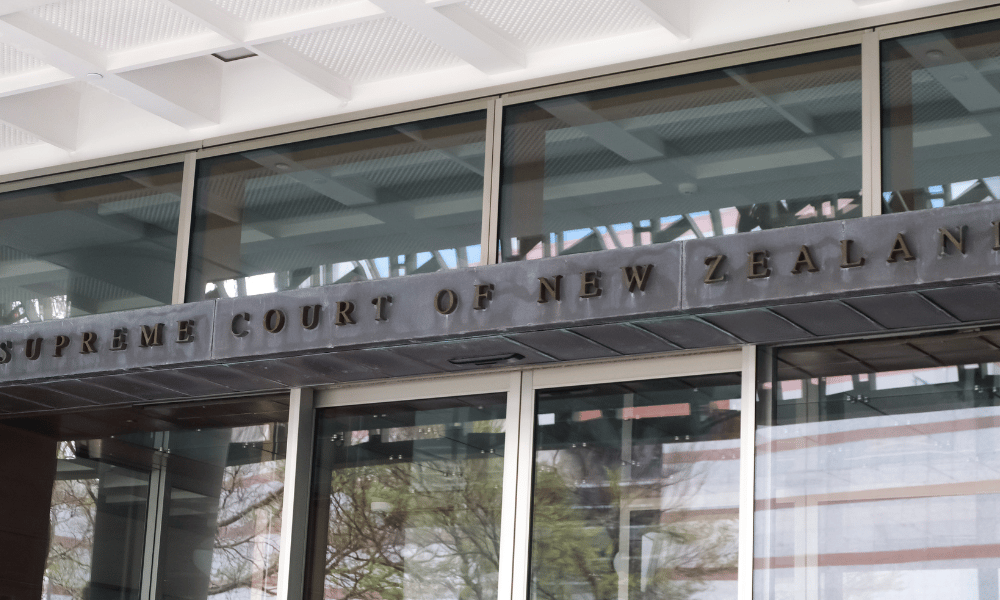
New Zealand’s Supreme Court has dismissed two charitable trusts’ applications for leave to appeal upon finding insufficient prospects of success in their claim that the action to remove and replace trustees did not serve the trusts’ best interests.
In Maka v Toailoa [2025] NZSC 149, the applicants in two cases – a church and a property trust – were closely related charitable trusts that shared an interest in proposed appeals. Certain developments followed official investigations into the church’s financial affairs:
The three individual respondents were a church pastor and two elders who were members of the church’s trust board. The fourth respondent, the attorney-general, represented the public interest in preventing misuse of property devoted to charitable purposes.
The three individual respondents brought an action seeking the removal and replacement of trustees of the two trusts. The three individual respondents successfully obtained Beddoe orders, prospective cost orders, and interim preservation orders.
Specifically, Johnstone J of New Zealand’s High Court found the action to remove and replace the trustees reasonable, appropriate, and in the trusts’ best interests.
Johnstone J considered the new church substantially the same entity as the prior church. Johnstone J required the church’s trust board and, if necessary to ensure payment, the property trust to pay the fair and reasonable litigation costs.
New Zealand’s Court of Appeal agreed that the application served the trusts’ best interests.
The appeal court ruled that the three individual respondents were not self-interested, requested relief regarding the trusts’ governance, and had standing to seek Beddoe orders, as the pastor was a former church trustee and the other two individual respondents were members of the church’s trust board.
The appeal court saw clear grounds for judicial intervention, considering an unauthorised amendment to the property trust deed, which might have introduced a non-charitable purpose, and an apparent need to return the properties held by the company to the property trust.
The appeal court said the evidence supported the view that the trusts’ management structure – which the church’s spiritual leader continued to influence, despite his disqualification from office based on inappropriate conduct – disregarded trust principles and had limited commercial competence.
The applicants filed two applications for leave to appeal the appeal court’s judgment.
The applicants alleged that the appeal court failed to appreciate the distinction between Beddoe orders, obtainable only by current or former trustees exercising their indemnity rights, and prospective cost orders, available to beneficiaries and third parties in rare and extreme circumstances.
The applicants argued that the three individual respondents were hostile and self-interested, were not trustees, lacked standing to seek orders against the property trust, and lacked support from the congregation whose donations would fund the costly litigation.
The applicants added that the preservation orders were excessive and causing financial distress.
The Supreme Court of New Zealand dismissed the applications for leave to appeal and ordered the applicants in the two proposed appeals to pay the three individual respondents a set of costs of $2,500. The Supreme Court noted that the attorney-general did not seek costs.
The Supreme Court acknowledged that the principles regarding the availability of Beddoe and prospective cost orders in connection with charitable trusts were a matter of public importance.
However, the Supreme Court determined that the applicants’ assertion that the proceeding did not serve the trusts’ best interests lacked sufficient prospects of success to justify leave.
The Supreme Court noted that the evidence showed that:




