Dispute revolves around assets in Perth Mint Australia accounts
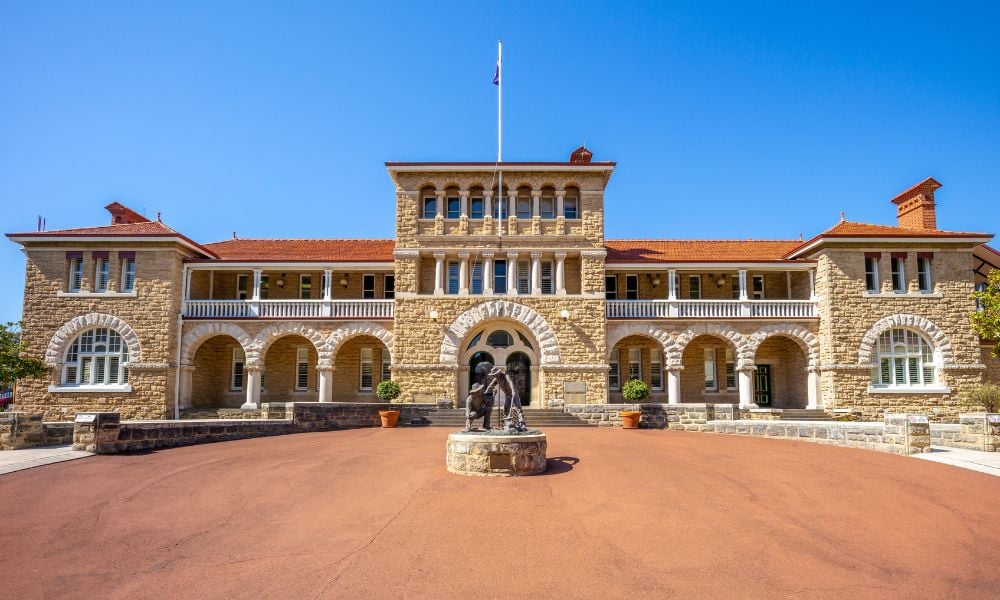
The New Zealand Court of Appeal has dismissed an application for leave to appeal against a High Court judgment partly granting an application to stay interim distribution orders concerning silver assets in Perth Mint Australia accounts.
In Nicholls v Nicholls [2026] NZCA 234, the parties met in 1981, began residing together in 1983, and married in November 1988.
The parties created two trusts and five companies. The applicant was the sole director and shareholder of the company that was the trustee of the trusts which owned the family home and other assets.
The parties separated in March 2022 and dissolved their marriage in June 2024.
Perth Mint accounts in the name of the applicant or entities that he controlled held a significant quantity of silver, amounting to around AUD 12 million. Through interim distribution orders made on 13 January 2026, the Family Court sought to:
The applicant appealed the Family Court orders and applied to stay such orders. He alleged that the Family Court wrongly determined that he held the silver only as a nominee.
On 30 June 2026, the New Zealand High Court heard the appeal. On 21 April 2026, Justice Anderson of the High Court partly granted the stay application and modified the Family Court orders. On 6 May 2026, she denied leave for the applicant to appeal the partial stay order.
The respondent wanted to register the orders of the Family Court of New Zealand in the Family Court of Western Australia. On 12 May 2026, the WA Court refused to issue the orders needed to implement the New Zealand court orders and adjourned the application to 9 June 2026.
According to the respondent’s counsel, if the New Zealand Court of Appeal denied the application for leave to appeal, then the WA Court would issue the respondent’s requested orders.
Before the WA court, Australian counsel should file a memorandum confirming the denial of leave by 8 June 2026. However, if the appeal court declined leave, the WA Court would vacate the 9 June 2026 hearing date.
Under s 56(5) of the Senior Courts Act 2016, the applicant applied for leave to appeal from Justice Anderson’s 21 April 2026 judgment.
Denying leave, the Court of Appeal of New Zealand first emphasised the high threshold that the applicant should meet to appeal against an interlocutory order.
Second, the appeal court described the applicant’s proposed arguable legal or factual error as a regurgitation of his merits arguments before the Family Court and before Justice Anderson in connection with the stay application.
Third, the appeal court did not see sufficient general or public importance or enough importance to the applicant in his asserted legal or factual error to outweigh the proposed appeal’s distinct lack of general and precedential value.
The appeal court explained that the substantive appeal before the High Court of New Zealand, scheduled to start on 30 June 2026, would address the modified interim distribution orders, which involved a tiny proportion of the total silver assets.
Fourth, the appeal court ruled that the additional delay caused by an appeal weighed heavily against allowing leave.
Fifth, the appeal court held that granting leave would not serve the interests of justice.
Lastly, the appeal court ordered the applicant to pay the respondent’s costs on a band B basis, plus the typical disbursements.