Ruling notes possible interplay between collective agreement and international law
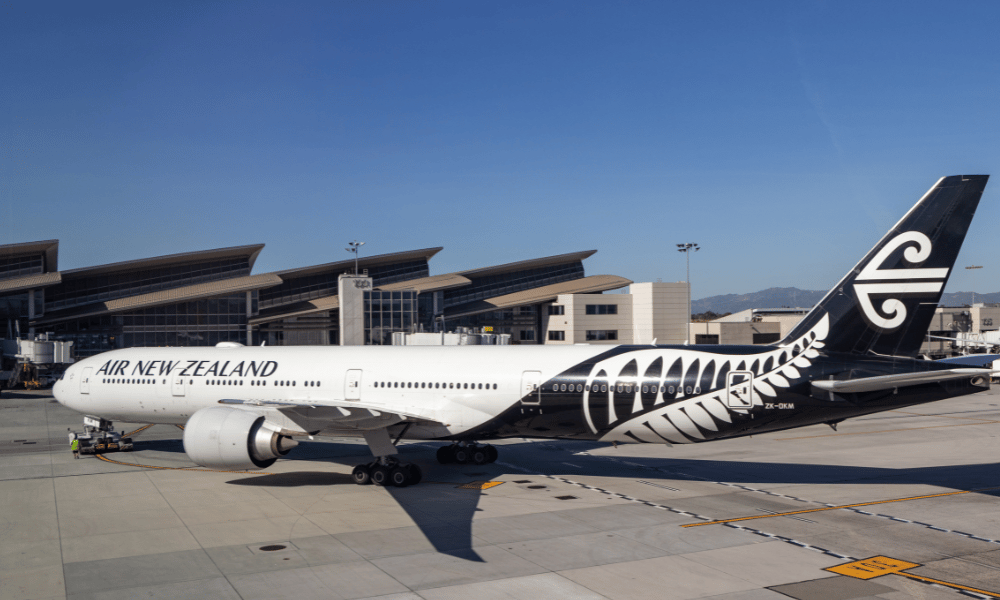
Subject to certain conditions, the New Zealand Court of Appeal gave Air New Zealand permission to appeal on three legal questions identified in its application for leave arising from an Employment Court decision in favour of one of its captains.
On 14 October 2025, the Employment Court determined that Air New Zealand, the applicant in Air New Zealand Limited v McGearty [2026] NZCA 180:
Air New Zealand applied for leave to appeal against the decision. In the three legal questions raised in its application, Air New Zealand alleged that the Employment Court committed legal errors by:
The captain opposed the application.
The Court of Appeal of New Zealand issued leave upon considering the parties’ submissions and the established criteria for such applications. The appeal court then addressed the conditions imposed on its grant of leave.
The appeal court acknowledged that it did not need to provide reasons for its judgment pursuant to s 61 of the Senior Courts Act 2016.
However, as the first question possibly engaged the s 214(1) proscription on granting leave on an issue concerning the construction of a collective employment agreement, the appeal court clarified that leave on this question depended on whether Air New Zealand advanced its argument on the basis stated in:
Specifically, Bryson indicated that s 214(1) did not preclude appeals asserting errors in the application of interpretive principles.
On the other hand, the New Zealand Air Line Pilots’ Association case addressed appeals alleging a misapplication or lack of any application of the relevant interpretive principles, with an operative impact on the result.
The appeal court noted that the parties should tackle the issue that might arise if the pertinent interpretive principles involved the interplay between the collective agreement’s provisions and international law, specifically the International Civil Aviation Organisation’s requirements and standards.
Given that the New Zealand Airline Pilots’ Association had intervener status before the Employment Court, the appeal court ordered the parties to advise whether they would pursue or support a similar intervention on appeal.
Lastly, the appeal court reserved costs until the resolution of the appeal.