Judge notes unmeritorious defence, delayed compliance with orders, ‘mealy-mouthed’ apology
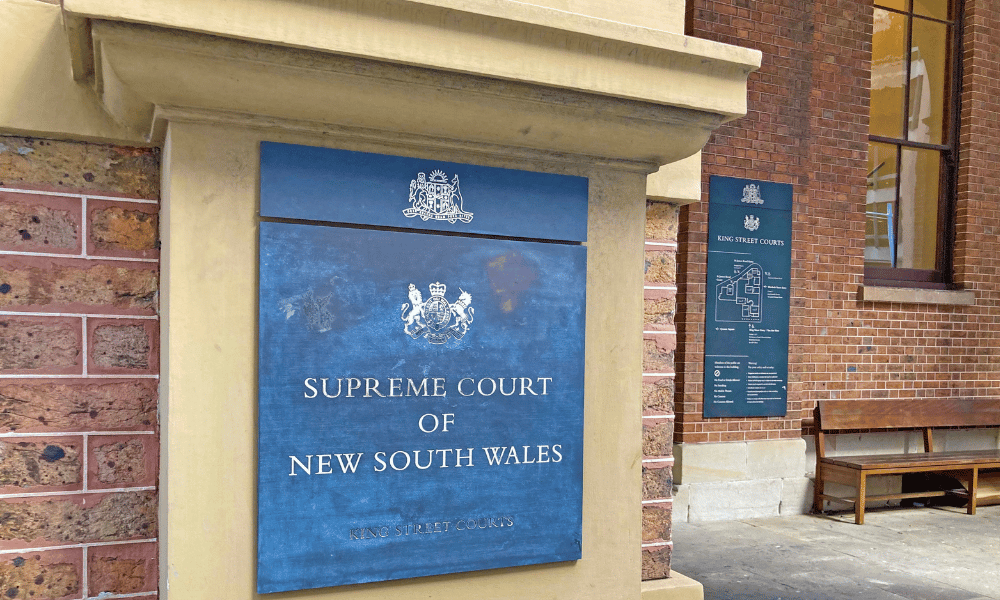
The New South Wales Supreme Court has ordered a defendant barrister to pay the registrar a fine of $25k for civil contempt, as well as the plaintiff’s indemnity costs of a notice of motion filed on 2 September 2026.
The case was Australian Continuing Legal Education Centre Pty Limited v Bates (Penalty) [2026] NSWSC 1385.
In a judgment delivered on 14 October 2026, Hammerschlag CJ of the NSW Supreme Court found contempt on the part of the barrister. Specifically, the judge determined that the barrister failed to timely produce the originals or copies of the following documents to the plaintiff:
Hammerschlag CJ of the NSW Supreme Court ruled that directing the defendant barrister to pay a $25k sum for civil contempt would reflect the seriousness of his contumacious behaviour and discourage other court officers from committing similar contempt.
The NSW Supreme Court found that the defendant barrister:
The NSW Supreme Court emphasised that the defendant barrister was a senior practitioner and court officer who knew the consequences of the requirement for punctilious compliance with court orders. The court added that the effects of his actions went beyond the impacts on the immediate parties.
“When the public observes a lawyer and officer of the Court acting in this way the administration of justice is brought into disrepute, and confidence in it undermined,” the judge wrote. “A disinterested observer may be prompted to ask, rhetorically, ‘if a lawyer, particularly one of those ones who wears a wig and gown, thinks they can get away with this and does, why shouldn’t I?’”
Upon the recommencement of the proceeding, the Supreme Court of New South Wales issued a 22 September 2026 ruling directing a hearing de novo, apart from the prior judge’s evidentiary rulings on objections to the parties’ affidavits and the receipt of physical exhibits tendered before that judge.
On 2 September 2026, the NSW Supreme Court declined leave to appeal under s 89(1)(b) of NSW’s Legal Profession Uniform Law Application Act against a costs assessment review panel’s allowance of a law firm employee’s work at higher hourly rates.
Enjoy this story? Read the latest litigation and dispute resolution news on the main page!