Court finds allegations of cronyism and improper purpose disclosed no reasonable cause of action
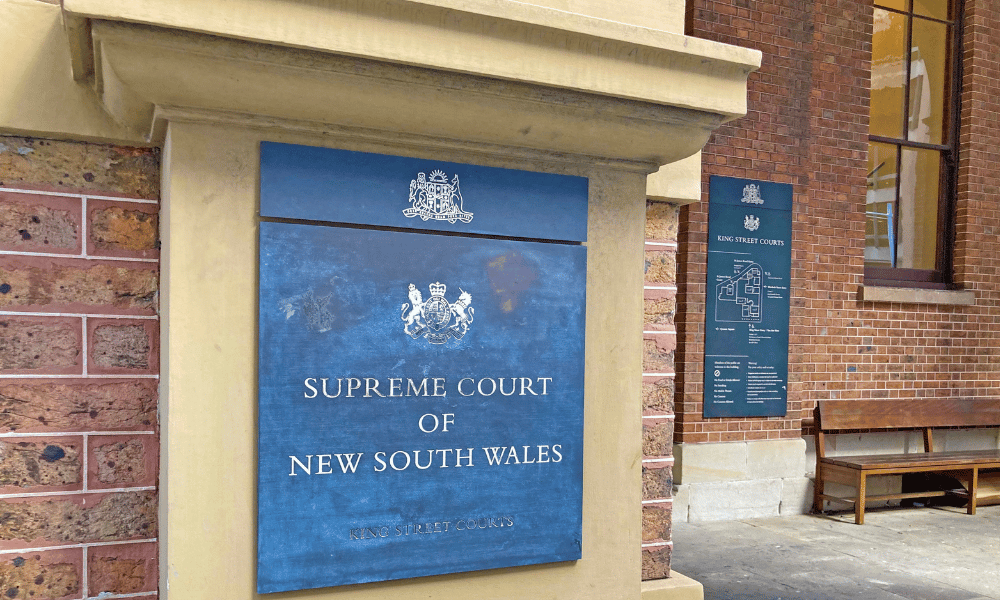
The Supreme Court of New South Wales (NSW) has summarily dismissed a medical practitioner’s proceedings against the NSW Legal Services Commissioner, finding his allegations of bias, cronyism and improper purpose disclosed no reasonable cause of action.
In Wanninayake v NSW Ministry of Health [2026] NSWSC 1022, the court granted the Commissioner’s application for summary dismissal under r. 13.4 of the Uniform Civil Procedure Rules 2005 (NSW).
The plaintiff commenced judicial review proceedings against 12 defendants in March 2026. He trained as a medical practitioner in Sri Lanka, relocated to Australia in 2005 and worked in hospitals in the Northern Territory, Queensland and New South Wales.
The Medical Council of New South Wales suspended his medical registration under s. 150 of the Health Practitioner National Law (NSW) in November 2023.
The plaintiff sought a review of the suspension under s. 150A. Three delegates considered the application and affirmed the suspension in November 2024 after obtaining further assistance from an independent psychiatric report.
The plaintiff then complained to the Office of the NSW Legal Services Commissioner about one of the delegates. The Commissioner closed a November 2024 complaint as misconceived under s. 277(1)(a) of the Legal Profession Uniform Law 2014 (NSW).
The Commissioner also closed two further complaints in May 2025 after finding them lacking in substance and misconceived.
In his Supreme Court proceedings, the plaintiff sought a declaration that the Commissioner had exonerated the delegate on misconstrued grounds because of “cronyism”. He also sought an order requiring the Commissioner to conduct an internal review.
The NSW Supreme Court considered whether the plaintiff’s material could support three grounds concerning the Commissioner: misinterpretation of s. 41O of the National Law, bias and improper purpose.
The court found the Commissioner did not rely on a construction of s. 41O when she closed the complaints. Instead, she concluded that the delegate’s role as a Medical Council panel member lacked a sufficient connection with the practice of law and that the alleged conduct could not amount to professional misconduct.
The court also found no basis in the pleadings or affidavit evidence to support allegations of actual bias. The plaintiff alleged the Commissioner showed solidarity, favouritism or cronyism towards the delegate because both belonged to the legal profession.
The judge found those circumstances could not support the bias allegations, even if the court treated the claim as alleging apprehended bias.
The court also rejected an alternative characterisation of the allegations as an improper-purpose claim. The court found nothing in the plaintiff’s material that could support an inference that the Commissioner exercised her statutory power to favour the delegate as a fellow lawyer.
The plaintiff also sought an order compelling the Commissioner to conduct an internal review under s. 313 of the Legal Profession Uniform Law. The court found the provision places that power within the Commissioner’s “absolute discretion” and that the court therefore could not grant mandamus.
The court concluded that the summons disclosed no reasonable cause of action against the Commissioner and summarily dismissed the proceedings.