Case originated from proceedings at Western Australian Magistrates Court
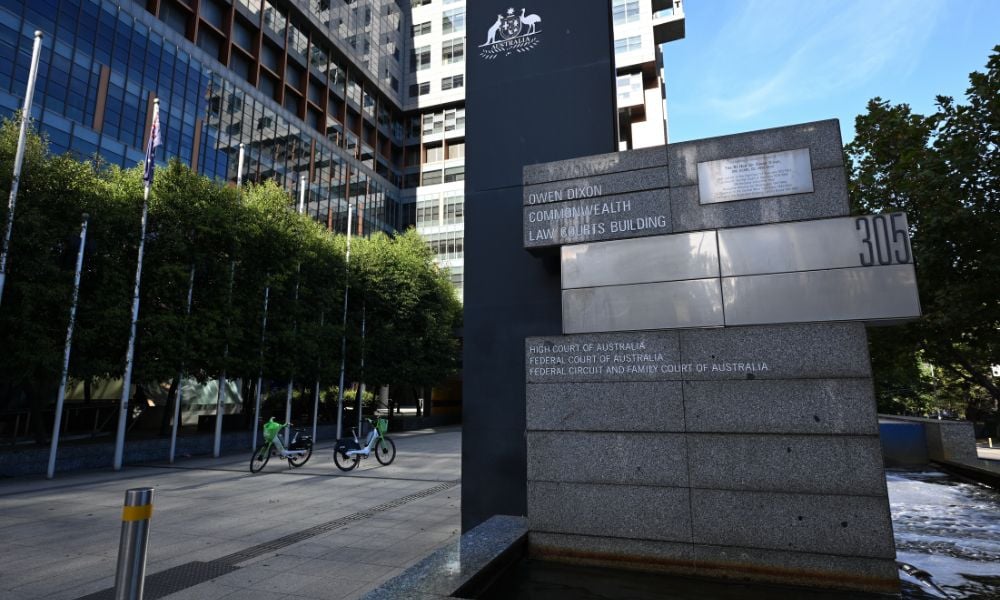
Characterising two proposed appeals as prolix, Australia’s Federal Court found it appropriate to dismiss two applications for leave to file the proposed notices of appeal from orders made in the court’s prior proceedings in WAD75/2026 and WAD20/2026.
The case was Reynolds, in the matter of an application by Reynolds [2026] FCA 1447. In an initial application, the applicant sought certain orders in connection with proceedings before the Magistrates Court of Western Australia.
A first registrar refused to accept the application for filing.
The applicant attempted to file an application to review the first registrar’s refusal decision under s 35A(5) of the Federal Court of Australia Act 1976 (Cth). A second registrar declined to accept the review application for filing.
In proceeding WAD75/2026, the applicant applied for a judicial review of the first registrar’s refusal. Meanwhile, in proceeding WAD20/2026, the applicant applied for a judicial review of the second registrar’s refusal.
In Reynolds v Stewart [2026] FCA 1291, the Federal Court dismissed the applicant’s two proceedings in WAD75/2026 and WAD20/2026.
The applicant wanted to bring two proposed notices of appeal against the primary judgment. He sought to file documents supporting his two proposed appeals.
In two applications filed on 21 September 2026, the applicant asked the court for leave to accept the documents for filing under r 2.27A of the Federal Court Rules 2011 (Cth).
In refusing leave to file the proposed appeals, the Federal Court found no need for an oral hearing and no reasonable prospects of success in the suggested grounds of appeal. The court noted that the proposed appeals included multiple grounds of appeal, each with detailed particulars.
The court pointed out that the grounds essentially complained that the primary judge failed to remedy deficiencies in the proposed originating application.
Upon reviewing the grounds, the court determined that the applicant distorted the judge’s true reasoning. The court concluded that the judge did not misapply the relevant law.
In proceeding WAD357/2026, the Federal Court denied leave to file the proposed appeal from the orders made in WAD 75/2026.
Upon reviewing the 12 grounds of appeal, the court noted that the applicant was asserting that the primary judge misapplied r 2.26 of the Federal Court Rules and engaged in a reasonable apprehension of bias.
On assessing the grounds, the court ruled that the applicant failed to disclose an error committed by the judge or a basis to believe that something extraneous to the merits might reasonably have influenced the judge.
The court concluded that the judge did not need to discern a cogent point beneath the application’s incoherent surface.
In proceeding WAD358/2026, the Federal Court declined leave to file the proposed appeal against the orders made in WAD 20/2026.
Upon reviewing the seven grounds of appeal, the court noted that the applicant was claiming that the primary judge failed to independently determine the proceeding. The court pointed out that:
Here are some of the Federal Court of Australia’s other recent decisions.
In a complex corporate insolvency proceeding where the plaintiffs repeatedly revised artificial intelligence (AI)-assisted summaries of thousands of documents and served them close to the scheduled hearing date, the court issued a 25 September 2026 decision addressing the cost consequences of vacating the hearing.
In a proceeding arising from an applicant’s defamation claim against a respondent, the court made a 21 September 2026 ruling rejecting an argument that the applicant’s explanation for making a certain admission was nonsensical or characteristic of an AI hallucination.
Enjoy this story? Read the latest litigation and dispute resolution news on the main page!