Lim Kim Hai must pay $800k after admitting directors’ duty and disclosure breaches

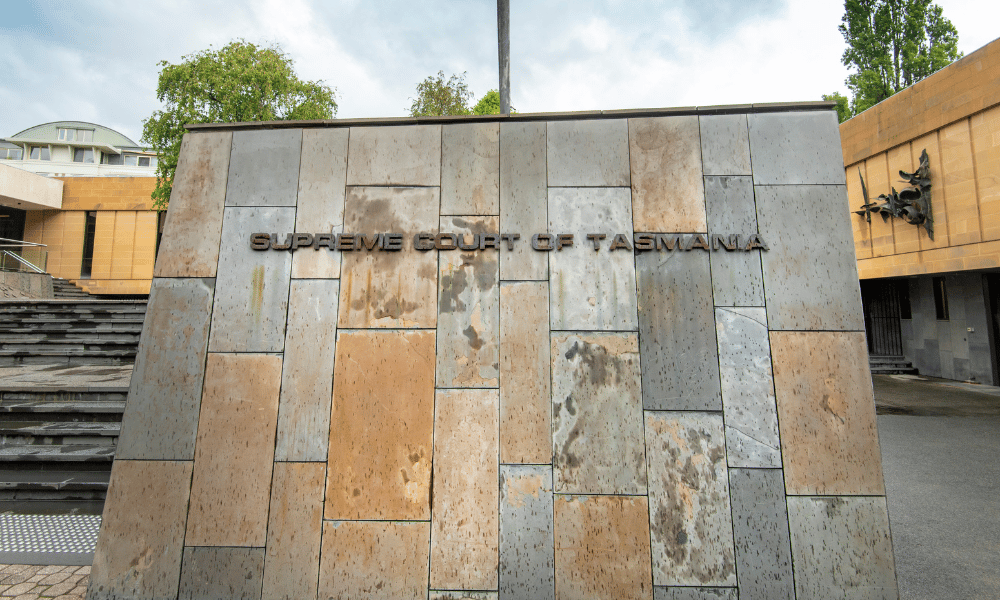
The Supreme Court of NSW has banned former Rex chief Lim Kim Hai from managing corporations for four years over a misleading profit forecast.
The court ordered Lim to pay an $800,000 penalty In the matter of Regional Express Holdings Ltd (No 2) [2026] NSWSC 1290, released 20 October 2026. He must pay the Australian Securities and Investments Commission (ASIC) $150,000 for its costs against him. Lim and ASIC agreed the orders after he admitted the regulator’s allegations against him.
Lim was chief executive and executive chairman of Regional Express Holdings Ltd (Rex) when the airline told the ASX on 28 February 2023 that it was “optimistic that the Group will have positive operating profits for the full FY23 barring any further external shocks.”
Lim helped draft and authorised the announcement. Rex did not correct it until 20 June 2023, when it forecast a $35 million operational loss. Its shares closed 12 percent lower the next day.
Lim admitted that he knew, or ought to have known, that Rex had no reasonable grounds for the forecast. Internal figures he received five days before the announcement showed a year-to-date group loss before tax exceeding $23 million.
On 26 April 2023, after receiving more loss figures, Lim emailed colleagues that about the cash flow for Rex’s regional operations, writing that “we may need to announce to the ASX so can we try to make the operational profits positive.”
The court made two declarations that Lim breached his duty of care and diligence under s. 180 of the Corporations Act 2001 (Cth) (the Act). He failed to take reasonable steps to ensure that Rex had reasonable grounds for the forecast, corrected or withdrew it and disclosed that the group had no reasonable grounds to forecast an operating profit. The court also declared that he was involved in Rex’s continuous disclosure breach, contravening s. 674A(3) of the Act.
Lim’s admissions reached further back than the court’s findings in a judgment released 30 June 2026 on ASIC’s claim against Rex and three non-executive directors. The court said that there was no logical inconsistency. It had found the earlier-period allegations against Rex, and those against the directors not established, not that they never occurred. Lim, who had not given evidence at that hearing, was well placed to assess the facts.
The court acknowledged that the contraventions were serious and that Lim was a senior executive. Even so, it accepted that the agreed penalty and ban fell within an appropriate range. The parties’ joint submissions, which the court broadly accepted, noted that Lim settled after the second day of the liability hearing, reducing the complexity of the case and ASIC’s trial expenses, but that there was no evidence before the court of of his contrition or remorse.
In an ASIC media release, Chair Sarah Court said that the outcome reinforced the importance of complying with disclosure obligations.
“Continuous disclosure is a core obligation for listed entities,” she said.