Dispute arose between deceased’s adult children, surviving de facto partner
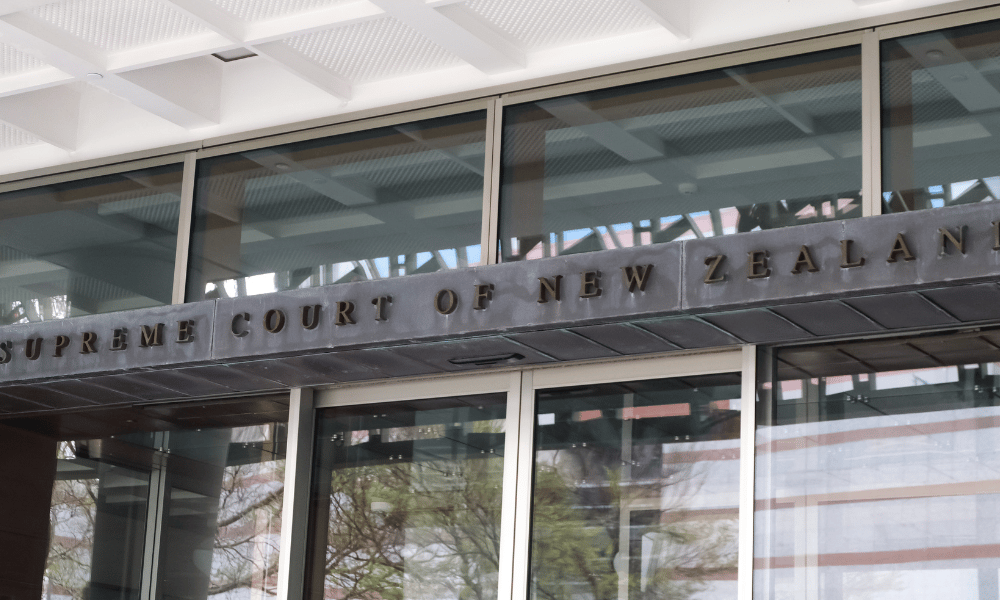
New Zealand’s Supreme Court granted permission to appeal in an estate proceeding, but instructed counsel to focus on the interplay between an agreement to contract out of the Property (Relationships) Act 1976 (PRA) and entitlements under the Administration Act 1969’s intestacy provisions.
The estate owner left no will when he passed away on 18 March 2016. The respondent in this case, who was his surviving de facto partner, became administrator of his estate. The appellants, who were his two adult children, challenged the respondent’s distributions to herself.
An agreement dated 6 June 2002 between the deceased and the respondent contracted out of the PRA.
Before the High Court, the appellants argued that the respondent elected option B under s 61 of the PRA and could rely on her entitlements under the intestacy provisions, rather than any entitlements under the 6 June 2002 agreement. van Bohemen J rejected this argument.
For the first time on appeal, the appellants argued that the 6 June 2002 agreement prevented the respondent from claiming the deceased’s separate property and relationship property share upon his death, as well as entitlements under the Administration Act’s intestacy provisions.
On July 30, in Rimmer v Wilton [2025] NZCA 374, the Court of Appeal of New Zealand partly granted the appellants’ application to amend the appeal grounds and dismissed the appeal.
The appeal court directed the estate to pay the respondent’s standard appeal costs on a band A basis, alongside the usual disbursements.
The appeal court rejected the appellants’ argument before the High Court that option A – to apply for relationship property division – would be mandatory if there was an agreement under s 21 of the PRA.
The appeal court explained that such an application would only be relevant and practically valuable for the surviving partner if she sought a relationship property division under the PRA provisions because they had not, or to the extent they had not, contracted out of the PRA.
The appeal court held that hearing the new argument on appeal would serve the interests of justice and not unfairly prejudice either party. The appeal court determined that the agreement allowed each party in the couple, in their respective wills, to:
The appeal court noted that the agreement did not exclude entitlements on an intestacy and the respondent’s choice of option B. According to the appeal court, by choosing this option, the respondent could receive:
On Oct. 31, in Rimmer v Wilton [2025] NZSC 150, the Supreme Court of New Zealand granted leave to appeal.
However, the Supreme Court asked counsel to focus on the question of the interplay between the agreement to contract out of the Property (Relationships) Act under s 21 of that legislation and the respondent’s entitlements under the intestacy provisions of the Administration Act.
The Supreme Court stressed that submissions should address whether, upon selecting option B under s 61 of the PRA, the surviving partner could receive their entitlements under a will or on an intestacy while also relying on the s 21 agreement.