Decision says evidence did not show full dependence on pension to pay living expenses
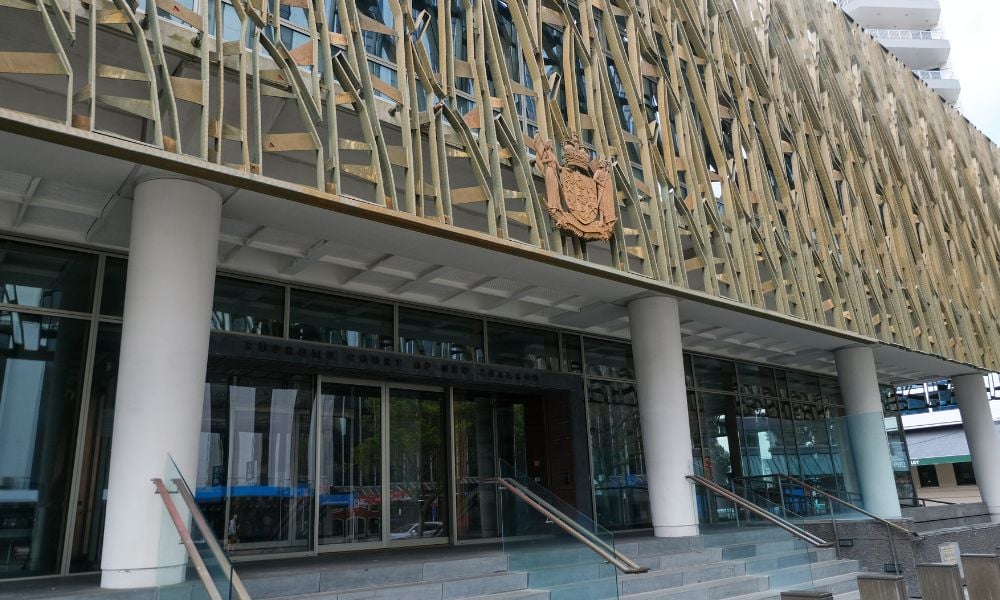
New Zealand’s Supreme Court dismissed applications challenging the denial of a fee waiver requested by an applicant who alleged that he could not secure legal aid and wholly depended on New Zealand superannuation (NZ Super) to meet his living expenses.
After the applicant offered a NZ Super receipt dated 14 September 2021, the deputy registrar asked for more recent evidence.
The applicant provided a 25 November 2024 letter from the Ministry of Social Development | Te Manatū Whakahiato Ora, which noted the suspension of his NZ Super payments despite his eligibility due to his receipt of a US pension greater than his NZ Super entitlement.
The deputy registrar refused to waive the filing fee upon finding that the application and supporting evidence failed to prove that the applicant relied entirely on the pension to pay his living expenses.
The applicant effectively applied for review of the deputy registrar’s decision. He alleged a conflict of interest and corruption.
He also applied for a fee waiver for a second time. He asserted grounds of public interest and denial of fair process. He argued that admitting court judgments as untested evidence in other proceedings plainly contravened the Evidence Act 2006.
Last 20 March, in Siemer v Attorney-General, [2025] NZSC 16, the Supreme Court of New Zealand dismissed the application to review the deputy registrar’s decision. The court required the applicant to pay the filing fee if he wished to continue applying for leave to appeal.
Regarding regulation 5(3)(b)(ii) of the Supreme Court Fees Regulations 2003, the court said the applicant failed to prove that he could not pay the fee and wholly depended on NZ Super to meet his living expenses, given that he received a more sizable overseas pension.
The court noted that he did not assert the broader ground in regulation 5(3)(b)(iii) that paying the fee would cause him undue financial hardship.
As for the ground of public interest, the court assumed without deciding that the proceeding engaged a matter of genuine public interest. However, the court ruled that the evidence failed to show that the proceeding would unlikely continue without a fee waiver.
Regarding the alleged lack of fair process, the court noted that it permitted the application seeking leave to appeal to proceed in parallel.
The applicant brought an interlocutory application effectively seeking to recall the court’s 20 March 2025 decision. He again asked for a waiver of the filing fee on public interest grounds.
He noted that the court assumed the existence of a genuine public interest in this case, which he treated as a positive finding.
The applicant also argued that the evidence established that the proceeding would not continue without a waiver.
On 19 August, in Siemer v Attorney-General, [2025] NZSC 106, the New Zealand Supreme Court dismissed the application seeking a recall for the same reasons mentioned in its 20 March 2025 judgment upon determining that the applicant raised no new matters.
The court directed the registrar to refuse to accept for filing any further recall applications relating to this matter.