NZ lost its fifth-place spot from last year as criminal justice, regulatory enforcement declined
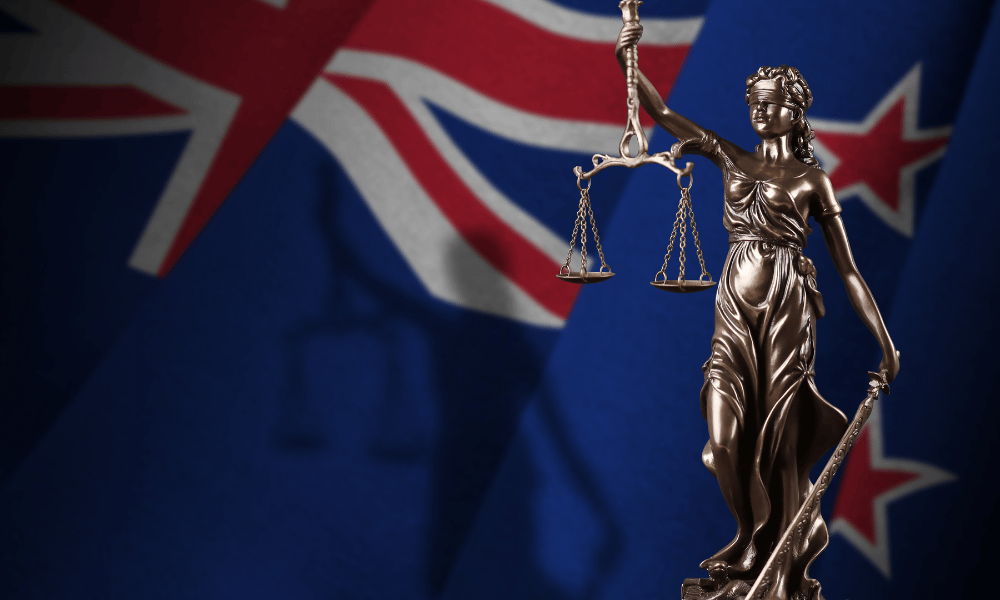
Concerns related to government transparency have driven New Zealand off its previous fifth place ranking in the World Justice Project Rule of Law Index.
The country is now ranked 7th out of 143 countries and jurisdictions in the 2026 edition of the index with an overall score of 0.83/1.0. The score for “constraints on government powers” declined by 0.86 compared to the previous year, while the scores for “open government”, “fundamental human rights”, “regulatory enforcement” and "criminal justice" dropped by 0.80, 0.83, 0.85 and 0.73, respectively.
The index noted that the effective restriction of government powers by the legislature, the judiciary, and independent auditing and review has declined overall compared to the previous year. Scores also dropped with regard to the sanctioning of government officials for misconduct, the adherence of transition of power to the law, and the subjection of government powers to non-governmental checks.
Moreover, New Zealand's scores when it came to the effectiveness of the criminal investigation system and the impartiality of the criminal system drifted down to concerning levels at 0.60 and 0.59, respectively.
By contrast, the scores for “absence of corruption”, “order and security” and “civil justice” ticked up by 0.89, 0.89 and 0.79, respectively. The index noted that civil justice is increasingly accessible and affordable to the public; it also noted the increased availability of accessible, impartial and effective alternative dispute resolution mechanisms.
Nonetheless, in spite of its slip down the ranks globally, New Zealand remains the top-ranked country in the East Asia and Pacific region when it comes to the rule of law. In particular, it is ranked first in the region when it comes to “constraints on government powers” and “fundamental human rights”.
The index indicated that New Zealand has improved in terms of effectively guaranteeing fundamental labour rights compared to the previous year. However, the country declined with regard to the effective guarantee of freedom of assembly and association, of freedom from arbitrary interference with privacy, of freedom of belief and religion, and of freedom of opinion and expression.
Notably, New Zealand was only second-ranked in the East Asia and Pacific region in terms of “due process of the law and rights of the accused” and the effective guarantee of “the right to life and security of the person”; the country was ranked fourth with regard to “equal treatment and absence of discrimination”.
Worldwide, the World Justice Project flagged wide-ranging concerns with restrictions on civic freedoms and increasing interference from governments in justice systems, with about two-thirds of the countries studied recording declines in these areas.
Last July 2025, the New Zealand Law Society | Te Kāhui Ture o Aotearoa cautioned the nation against complacency with its global position with regard to rule of law. The organisation released its watershed report Strengthening the rule of law in Aotearoa New Zealand last year, which highlighted access to justice barriers, poor legislative and policy making processes, and sustenance of the judicial system's independence as significant and urgent threats to the rule of law.