Ruling finds resolutions created no debtor/creditor relationship

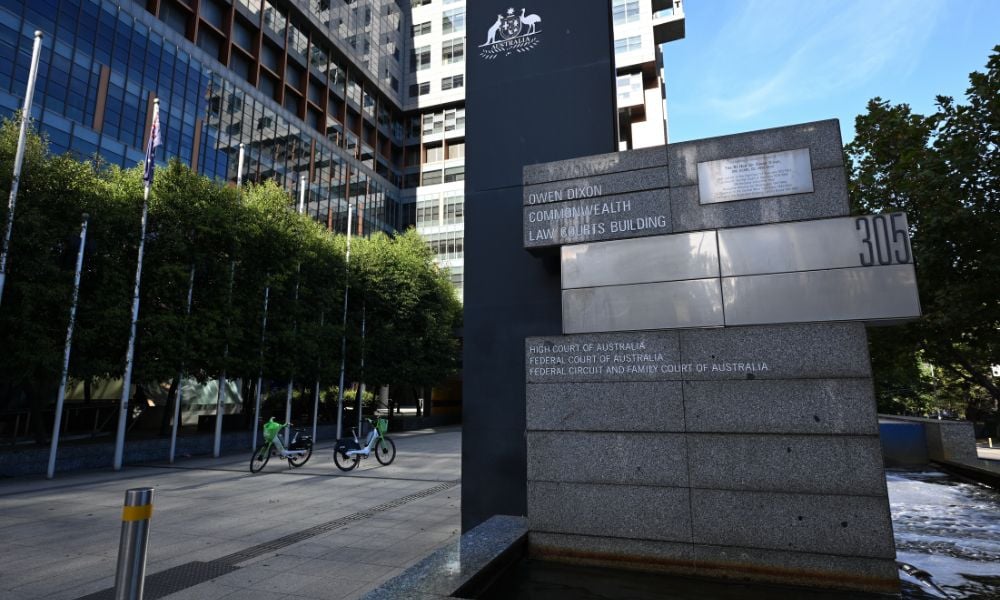
Australia’s High Court has dismissed an appeal against the federal commissioner of taxation’s appeal from the Full Federal Court’s denial of an appeal from the Administrative Appeals Tribunal’s decision upholding accountant Steven Bendel’s objections against amended income tax assessments.
Commissioner of Taxation v Bendel [2026] HCA 18 involved the Bendel group, comprising multiple entities that had an accounting and tax agent practice and invested in commercial property syndicates. This included Gleewin Pty Ltd (Gleewin), Gleewin Investments Pty Ltd, and the Steven Bendel 2005 Discretionary Trust. Gleewin was the trustee of the 2005 trust.
In the income tax years ending 30 June 2014 to 30 June 2017, Gleewin made resolutions to “set aside” defined percentages of the 2005 trust’s net income in favour of one or each of its discretionary objects: the taxpayers, Gleewin Investments, and Mr Bendel.
Under its terms, the 2005 trust created a separate trust to hold the amounts set aside each income tax year. Gleewin did not pay Gleewin Investments the amounts set aside and held in separate trusts. At the relevant times, Gleewin Investments did not call for such payment.
Based on s 109D of the Income Tax Assessment Act 1936 (Cth) (1936 Act), the commissioner issued notices of amended assessment to Gleewin Investments for those income tax years.
The commissioner alleged that the amounts set aside for Gleewin Investments (dubbed unpaid present entitlements) each constituted a “loan” under s 109D(3) in Div 7A of the 1936 Act, as they amounted to Gleewin Investments’ “provision of credit or any other form of financial accommodation” to Gleewin as trustee, or “in substance” Gleewin Investments’ loans of money to Gleewin as trustee.
Gleewin Investments and Mr Bendel objected to the amended assessments. The tribunal set aside the objection decisions and remitted the objections to the commissioner for reconsideration. The Full Court of the Federal Court of Australia unanimously dismissed the commissioner’s appeal.
The appeal raised the primary issue of the application of Division 7A and the construction of the expanded definition of “loan” in s 109D(3) of the 1936 Act. However, the following preliminary questions addressed the appropriate construction and legal effect of the resolutions:
Australia’s solicitor‑general, appearing for the commissioner, acknowledged that the court should resolve these preliminary questions to rule on the appeal.
Chief Justice Gageler and Justices Gordon, Edelman, Steward, and Gleeson of the High Court of Australia disagreed with the commissioner’s submissions on the preliminary questions.
The justices also rejected the commissioner’s argument that the expanded definition of “loan” in s 109D(3) of the 1936 Act covered circumstances in which a beneficiary did not insist on the trustee’s payment of an unpaid present entitlement.
The justices determined that:
The justices ruled that Gleewin Investments did not “loan” Gleewin the unpaid present entitlements under s 109D. Regarding the resolutions’ legal effect, the justices held that the resolutions:
The justices pointed out that Gleewin Investments made no such call and that Gleewin, as trustee, made no such admission.
The justices decided that the resolutions identified with enough certainty the property subject of the separate trusts by setting aside all the 2005 trust’s net income in defined percentages as between Gleewin Investments and Mr Bendel in each of the income tax years.
The justices saw nothing ambiguous about the identification of the property subject of the trust. The justices explained that the term “net income” made the property ascertainable.
On the other hand, Justice Jagot wanted to allow the commissioner’s appeal, to set aside the Full Court’s and the tribunal’s orders, and to remit the matter to the tribunal for a determination under the law. Justice Jagot found that s 109D(1) applied to Gleewin Investments’ “loans” to Gleewin in the relevant years.
Justice Beech-Jones also wanted to allow the commissioner’s appeal and to make the orders proposed by Justice Jagot.