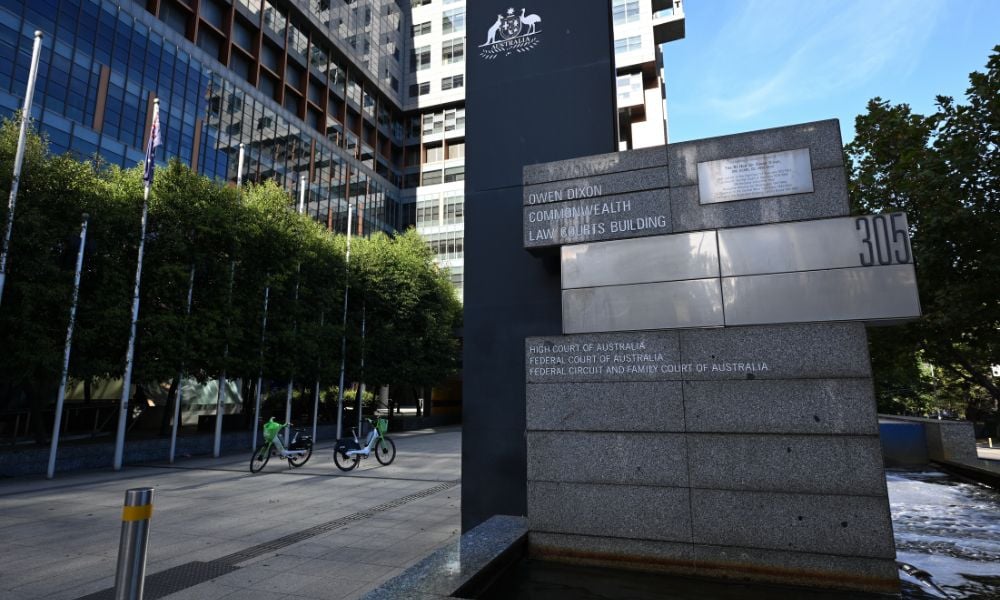
Single justice finds filing frivolous, vexatious, abusive of process

A single justice of Australia’s High Court did not allow an applicant to file a proposed application seeking writs of prohibition and mandamus, declarations, injunctive relief, and other relief for being frivolous, vexatious, and abusive of process.
In the matter of an application by Alkaisi for leave to issue or file [2026] HCASJ 6, the applicant named eight defendants in her proposed application:
The applicant claimed that state officers circumvented the High Court’s supervisory jurisdiction under s 75(v) of the Commonwealth of Australia Constitution Act when exercising powers under Commonwealth legislation.
The applicant asserted that she might have been under surveillance pursuant to the Crimes Act 1914 (Cth) or otherwise. She alleged that she could not confirm whether she was under surveillance due to:
On 16 February 2026, Justice Gordon directed the registrar to refuse to issue or file the proposed application without prior leave of a justice under r 6.07.2 of the High Court Rules 2004 (Cth).
On 25 February 2026, the applicant filed an ex parte application seeking leave to issue or file her constitutional writ application dated 6 February 2026.
Justice Jayne Jagot of the High Court of Australia dismissed the ex parte application without listing the application for hearing. She saw no apparent factual or legal basis for the claims made or the relief sought.
Jagot ruled that the applicant had manifestly untenable bases to invoke the High Court’s jurisdiction. Jagot described the applicant’s requested relief – including proposed constitutional questions disconnected from any intelligible underlying facts – as voluminous and largely incomprehensible.
Jagot ruled that the applicant’s materials failed to advance any legally intelligible basis to grant the requested relief and failed, on their face, to show that she had been subject to the alleged exercises of power. Jagot added that the materials failed to disclose:
Jagot did acknowledge an affidavit filed on 13 March 2026, in which the applicant called for procedural leniency based on her severe attention-deficit hyperactivity disorder and lack of legal representation.