Court rejects director’s bid to block the order over the timing of the tax debt

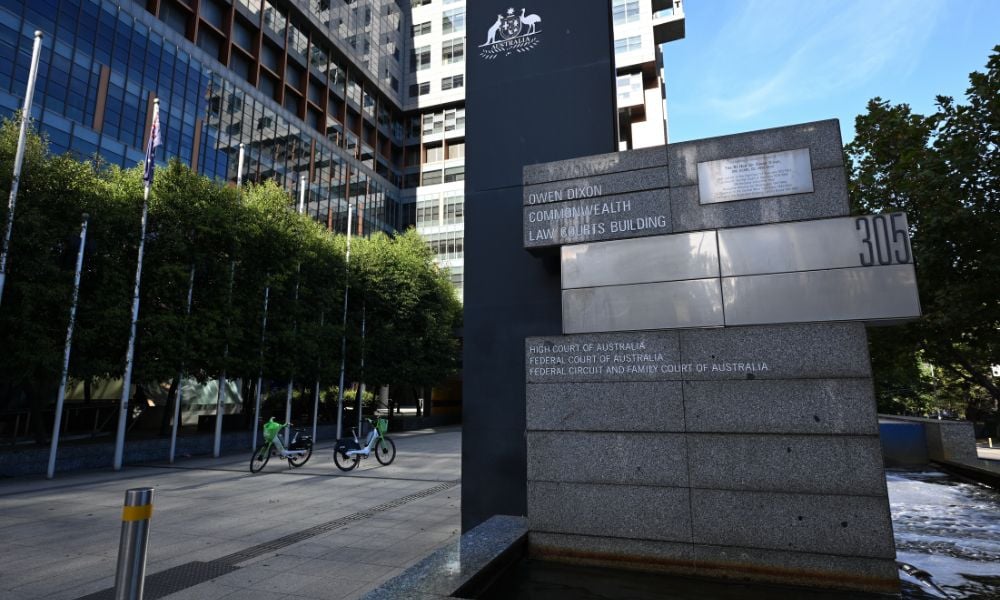
The Federal Court has given a liquidator until 31 March 2027 to pursue voidable transaction claims over the $226m Gold Merchants International collapse.
Justice O’Callaghan made the shelf order in Woods, in the matter of Gold Merchants International (Aust) Pty Ltd (in liq) under s 588FF(3)(b) of the Corporations Act on 3 June, extending the window for liquidator Robert Woods to bring claims against the company.
Gold Merchants International incorporated in July 2008 and ran a wholesale business in scrap gold, gold bullion and other precious metals. Between December 2014 and May 2017, the deputy commissioner of taxation audited the company’s activity statements and income tax returns and assessed net amounts and penalties totalling almost $144m. The company stopped trading on 3 May 2017.
Members wound the company up in December 2022, and creditors later replaced the original liquidators with Woods in January 2024. The commissioner has lodged a proof of debt of $226,500,343.71, which makes up 98 percent of the company’s identified unsecured debts.
Sole director Peter August opposed the order. He argued the tax liabilities behind the commissioner’s proofs did not arise until the amended assessments issued on or after 3 May 2017, so the company could not have traded while insolvent before that date. On that footing, he said, Woods could not prove any earlier disposition was an insolvent transaction and the order served no purpose.
Justice O’Callaghan rejected that argument. He held that an amended assessment alters and replaces the original assessment, leaving only one assessment in force at any time. Because the company had monthly tax periods, each net amount fell due in the month after the relevant period ended under the GST legislation, and that liability counts as a debt for the insolvent trading provisions. The judge added that a debt can arise even without an assessment where transactions generate a calculable tax liability.
Accepting that approach would produce an odd result. A company could lodge fraudulent monthly GST returns for years, then claim it never traded while insolvent because those returns showed credits owed to it rather than amounts owed to the commissioner.
For a shelf order, the judge needed only to find the anticipated claims were not so devoid of prospects that an extension would unfairly expose August to suit. He found that threshold met.
Woods explained that he had inherited a company with no prior investigation, insufficient property to fund inquiries, and a lack of books and records. He told the court that August’s non-compliance with information requests forced him to seek ASIC’s help, and that several key documents surfaced only when he reviewed August’s own affidavits. The judge accepted the explanation, noting August never challenged Woods’ evidence.
On prejudice, Justice O’Callaghan gave August’s passage-of-time argument little weight. He agreed with the commissioner that the court should weigh creditors’ interest in a possible recovery and the public interest in investigating an insolvent entity, and pointed to the company’s brazen scheme to avoid paying taxes.
The court extended time to 31 March 2027 and ordered the liquidator’s costs be costs in the winding up.