Ruling rejects claims about conflict of interest, failure to consider law-related experience
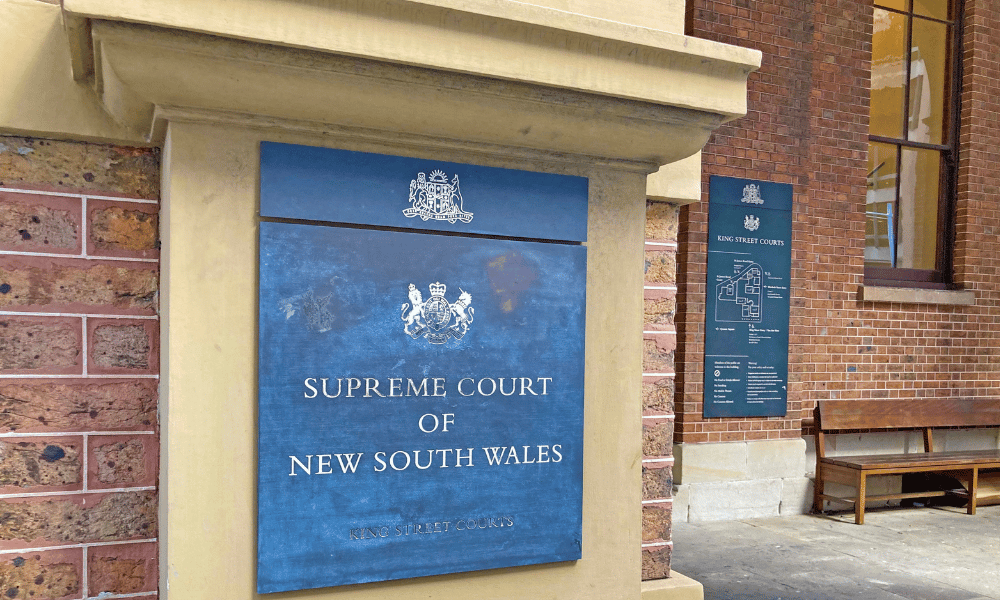
The New South Wales Supreme Court’s Court of Appeal has upheld an admission board’s two decisions effectively refusing a request for readmission to the legal profession sought by a man removed from the roll of lawyers over a decade ago.
In Montenegro v Legal Profession Admission Board (No 4) [2026] NSWCA 199, the applicant earned admission as a lawyer of the NSW Supreme Court in 2005.
In 2015, the NSW Court of Appeal ordered the applicant’s removal from the roll of lawyers. The appeal court declared that he was not a person of good fame and character.
In 2017, the applicant unsuccessfully applied for a compliance certificate before the Legal Profession Admission Board (LPAB). In 2022, he again applied for a compliance certificate.
On 18 June 2024, the LPAB refused to issue a compliance certificate under s 19 of the Legal Profession Uniform Law 2014 (NSW). On 8 October 2024, the LPAB rejected the applicant’s reconsideration request.
Through a summons filed on 22 June 2026, the applicant requested a judicial review of the LPAB’s decisions on 18 June 2024 and 8 October 2024 under s 69 of the Supreme Court Act 1970 (NSW). He raised grounds regarding:
The NSW Court of Appeal dismissed the applicant’s summons with costs.
In interpreting the requirement in Schedule 3 to the Legal Profession Uniform Law Application Act 2014 (NSW) that the LPAB keep “full and accurate minutes,” the NSW Court of Appeal held that it required minutes accurately recording every LPAB decision, rather than requiring the LPAB to keep a detailed record of every meeting’s occurrences.
The court found no requirement that the LPAB minutes include the details sought by the applicant.
To the extent that there was any inaccuracy or incompleteness in the minutes, the court explained that the validity of the meeting and of the decisions made during it turned on what happened at the meeting, not on whether the minutes were accurate.
The NSW Court of Appeal saw no basis to believe that Ball’s presence in the room would impact the validity of the decision of other LPAB members.
The court added that the LPAB did not need to permit the applicant to provide submissions regarding its procedures in circumstances where:
Regarding r 14(1)(d), which required an applicant to provide details of any law-related experience and left the LPAB to consider the weight it should give to the material, the NSW Court of Appeal saw no legal or other error in the LPAB’s finding that the applicant’s information was insignificant.
Here are some previous decisions in matters involving the same parties.
On 15 June 2026, the NSW Court of Appeal adjourned the hearing of a motion for leave to issue a subpoena requiring the former president of the Law Society of New South Wales to attend and provide evidence in the substantive proceedings.
In proceedings arising from the applicant’s attempts to gain readmission to the roll of legal practitioners, the NSW Supreme Court issued a 3 June 2026 decision determining that it would be unjust to order his requested production of documents at this point.
Enjoy this story? Read the latest litigation and dispute resolution news on the main page!