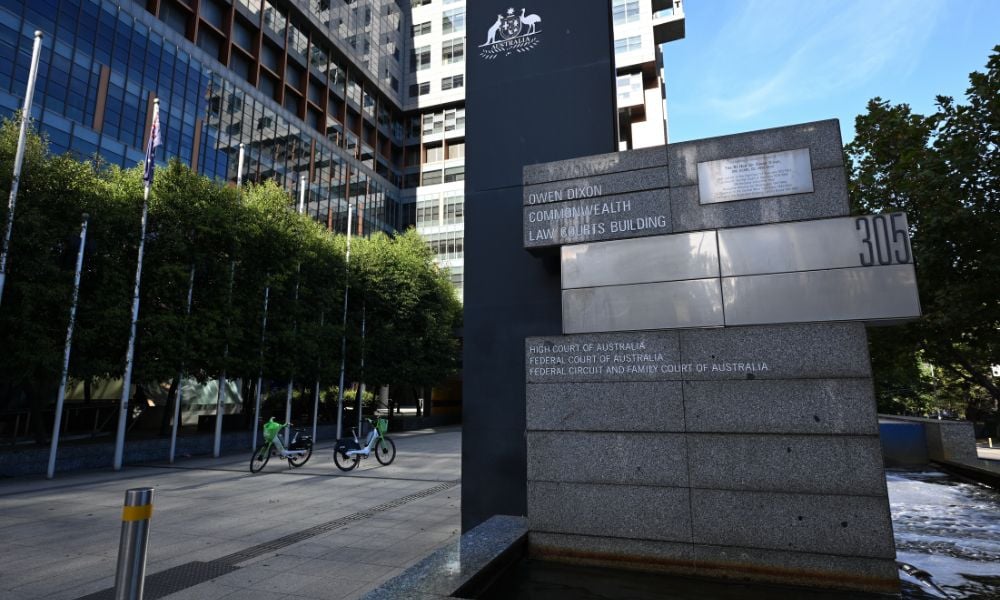
Issue revolves around whether tribunal exercised judicial power in ordering damages payment

Australia’s High Court ruled that a tribunal does not exercise judicial power in ordering a public sector agency to pay damages for contravening information protection principles in ss 8–19 of the Privacy and Personal Information Protection (PPIP) Act 1998 (NSW).
In New South Wales v Wojciechowska, [2025] HCA 27, before the New South Wales Civil and Administrative Tribunal, the respondent claimed damages under s 55(2)(a) of the PPIP Act to claim a contravention of information protection principles.
The respondent, a resident of Tasmania, asked the tribunal to conduct an administrative review of numerous decisions, including decisions made on behalf of the New South Wales Police Force Commissioner under the PPIP Act.
Next, the respondent filed proceedings in the Supreme Court of New South Wales. She alleged that the tribunal lacked jurisdiction over administrative review applications respecting the damages she requested under s 55(2)(a).
The jurisdictional issue came before the Court of Appeal of the Supreme Court of New South Wales. On 17 August 2023, the appeal court made the following findings:
Upon receiving special leave to appeal, the state alleged that the appeal court made errors when it:
The High Court of Australia allowed the appeal but ordered the appellant to pay the respondent’s appeal and incidental costs.
The court determined that it could distinguish Brandy from the present proceeding. The court acknowledged that the allegedly violated statutory provisions were incomparable to those subject of the complaint in Brandy.
First, the court ruled that the PPIP Act, as opposed to Brandy’s statutory scheme, did not establish a norm of conduct binding on an individual or specify that conduct violating such a norm would be unlawful. Instead, the court said the PPIP Act creates norms applicable only to public sector agencies.
Second, the High Court held that the internal review process under part five of the PPIP Act – manifestly an administrative body’s or individuals’ exercise of administrative power – established no enforceable right to a specific remedy. The court noted that s 53(7) of the PPIP Act empowered a public sector agency to do particular things, including taking no action.
Third, the court decided that an applicant’s “right” to internal review under s 53(8)(c) of the PPIP Act
meant the right to ask the tribunal to administratively review the internal review findings and the actions that those findings directed the public sector agency to take.
The court added that s 53(8) demonstrated the New South Wales Parliament’s manifest intention for the tribunal’s review to fall within its administrative review jurisdiction.
The court concluded that the tribunal order under s 55(2)(a) of the PPIP Act did not involve the tribunal’s exercise of judicial power and thus did not engage chapter III of the Constitution, given that the tribunal’s power was administrative and the respondent resided outside NSW.
According to the High Court, by operation of s 78(3) of the CAT Act, a s 55(2)(a) tribunal order would become binding, authoritative, and enforceable as a court judgment upon the person filing the registrar’s certificate certifying the amount ordered by the tribunal in a court of the requisite jurisdiction. Without such a filing in the appropriate court, it would be unenforceable.