Directors couldn’t shake the claims - here’s the argument the court flatly refused
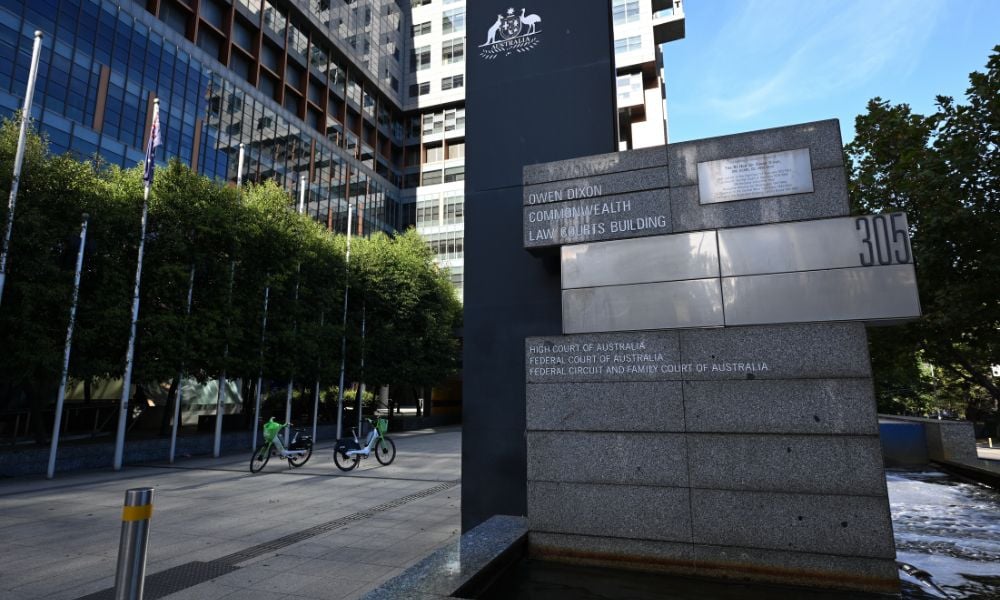
Mountain Asset’s directors and staff should answer personally to misleading conduct and accessorial liability claims after the Federal Court cleared a $2m investor pleading.
Justice Goodman granted Morcom Holdings leave to amend its statement of claim against the directors and employees of a collapsed wealth management firm, rejecting every objection the active defendants raised in Morcom Holdings Pty Ltd v Mountain Asset Partners Pty Ltd (in liquidation) (No 6) [2026] FCA 690.
The claim concerned convertible notes that Morcom invested in ALAMMC 4 Pty Ltd and SDA 3 Pty Ltd, each worth $1m. Morcom alleged that Mountain Asset employee Benjamin Ross made misleading representations that contravened provisions of the Australian Consumer Law, the ASIC Act, and the Corporations Act, and that fellow employee Ryan Lenton and directors James Gardner, Adam Newman, and Adnan Tanveer were each involved in those alleged contraventions. The court did not decide whether the allegations were true.
The objecting defendants - the third to sixth defendants - argued the pleading did not establish that Ross acted in a personal capacity rather than merely as Mountain Asset’s agent, so they could not have been accessorily liable for his conduct. Justice Goodman disagreed. The pleading identified Ross as a person capable of being sued, attributed particular representations to him personally, named him as a person subject to the statutory prohibitions, and alleged he contravened those provisions. Whether Ross acted only on behalf of Mountain Asset remained a question for trial, not for the amendment application.
Lenton mounted similar challenges. He argued the pleading disclosed no personal-capacity claim and lacked particulars supporting the allegation that he knew the relevant representations were false. Justice Goodman held the pleading adequately alleged that Lenton attended a meeting on 10 May 2022, knew the representations Ross made were false, and engaged in misleading conduct through his silence. The judge noted that rule 16.43 of the Federal Court Rules required a party who pleaded knowledge to state the facts relied on, and, because Morcom signalled it would rely on matters not yet fully particularised, gave it the opportunity to provide full particulars rather than rule on adequacy then.
Gardner, Newman, and Tanveer challenged the accessorial liability case on several fronts, contending that various knowledge allegations lacked supporting particulars and that certain paragraphs were irrelevant or embarrassing. Justice Goodman rejected each. He held it was not the court’s role at the pleading stage to assess whether the evidence in the particulars made good the assertions of knowledge. He also rejected the argument, built on Dowsett J’s observations in Australian Competition & Consumer Commission v Michigan Group Pty Ltd [2002] FCA 1439, that an accessory had to know of the precise representation rather than one “to the effect of” it, finding that the authority did not address that wording.
Justice Goodman granted leave to file the amended statement of claim, on condition that Morcom provided its best particulars of the knowledge pleaded against Lenton. He ordered the third to sixth defendants, who unsuccessfully opposed the application, to pay the costs of the interlocutory application, while Morcom accepted it should bear the active defendants’ costs thrown away by the amendments. The proceeding returned for case management on 2 July 2026.