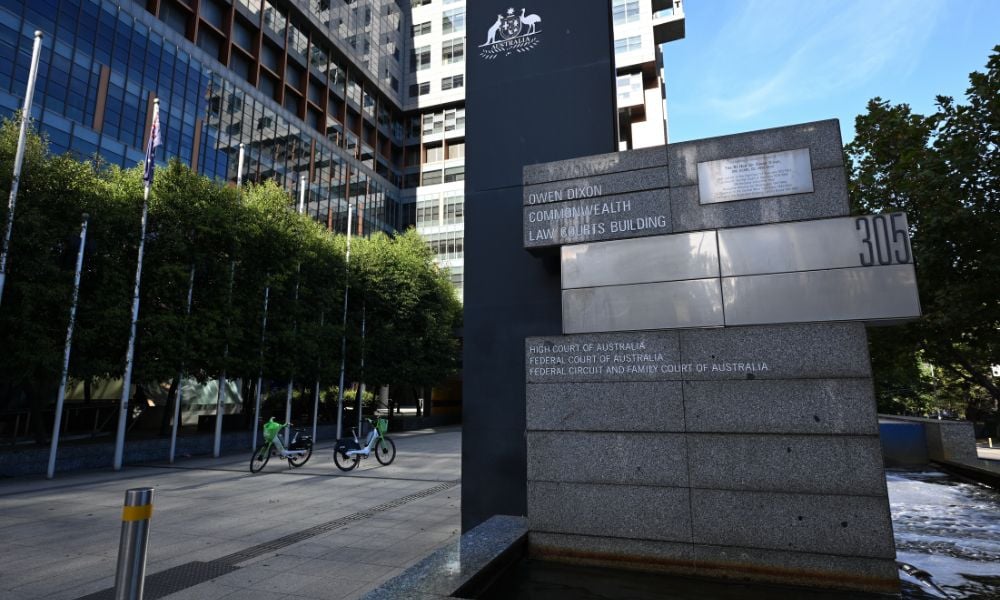
Ruling addresses dilemma facing thousands stuck with aging Ford vehicles in sprawling class action
The Federal Court has issued orders that allow thousands of Ford owners to sell their vehicles while maintaining their right to claim damages in a major automotive class action.
Justice Perram handed down the decision on February 2, 2026, in Capic v Ford Motor Company of Australia Pty Ltd, addressing a problem facing class members who wanted to sell aging vehicles but feared losing their claims for reduction in value damages.
The court used its powers under section 33Z(1)(g) of the Federal Court of Australia Act to "crystallise" the claims. This means owners can now sell their Ford Focus, Fiesta, or EcoSport vehicles fitted with defective DPS6 transmissions, and the buyer receives the car without the attached legal claim.
"The effect of proposed order 6 will be that when vehicles are sold the purchasers will not receive with their title to each vehicle the right to claim reduction in value damages under the relevant guarantee," Justice Perram wrote.
The case originally involved 73,451 vehicles sold between January 2011 and November 2018. Many vehicles have changed hands multiple times, creating a class larger than the raw vehicle numbers suggest. The class expanded in December 2024 to include owners who acquired vehicles between November 2018 and November 2024.
The vehicles suffer from three component deficiencies and two architectural deficiencies. Input shaft seals tend to leak, clutch lining proves inadequate, and transmission control modules develop solder cracks. The architectural problems involve inadequate heat management and poor handling of torsional vibrations from the crankshaft. These defects create risks of clutch shudder and sudden power drops.
Ford had argued the crystallization orders exceeded the court's power. The manufacturer submitted that section 33Z(1)(g) could not authorise orders that section 33Z(1)(e), which deals with damage awards, could not achieve.
Justice Perram rejected this argument, finding that section 33Z(1)(g) is sufficiently broad to support the crystallization orders. He found no negative stipulation in section 33Z(1)(e) that would prevent using the broader power in section 33Z(1)(g).
The court also resolved critical questions about successor owners' rights. When Ms Toni Dunn bought her 2015 Ford Focus as a third owner through a private sale, Ford argued she could not claim damages based on the original owner's section 54 guarantee.
The court disagreed, ruling that limb (c) of the "affected person" definition extends to all successors in title, not just immediate successors like liquidators or trustees in bankruptcy.
"The extrinsic materials do not provide any explanation for why it was thought appropriate to afford consumer remedies to persons who derived their title from a consumer by devolution (such as a trustee in bankruptcy or a legatee) but to deny it to persons who derived their title to goods more conventionally by an act of acquisition such as a purchase," Justice Perram wrote.
Ford's limitation defense also failed. The manufacturer argued that new class members added in December 2024 should have known about the defects years earlier through press coverage of the original trial, ACCC proceedings, and the $10 million penalty Ford paid in 2018.
The court found that class members needed to know about the specific component and architectural deficiencies – not just that their vehicles had problems – for the limitation period to run. Since the trial judgment identifying these defects came down on June 29, 2021, earlier publicity could not trigger the three-year limitation period.