ERA Legal stays on, but $283k unconscionable conduct fight continues

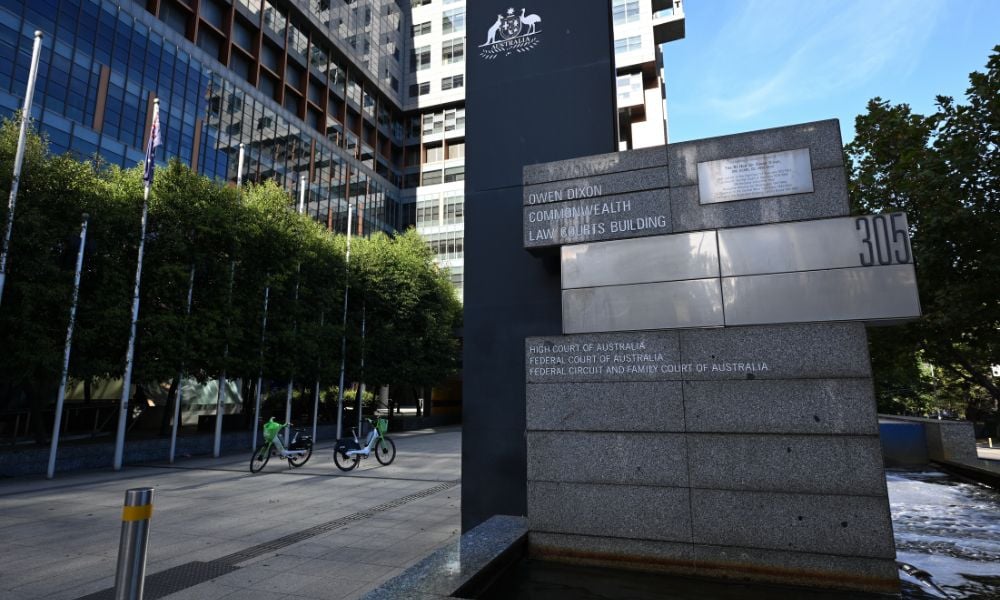
The Federal Court dismissed applications for interlocutory injunctions to bar ERA Legal from acting for lenders in a $66.7 million loan dispute.
Feutrill J handed down the decision on 25 May 2026 in Flinders Street Developments Pty Ltd v Bond Finance No 5 Pty Limited [2026] FCA 637, refusing to restrain the lenders' law firm despite allegations its fees formed part of an unconscionable conduct claim.
The proceedings involve 30 borrowers and guarantors under a loan deed through which Bond Finance No 5 Pty Limited and Finance Dom Pty Ltd advanced approximately $66.7 million. ERA Legal acted for the lenders in the original loan transaction and continued to represent them in the litigation.
The borrowers sought to disqualify ERA Legal on two bases: that the firm lacked independence because its legal fees sat at the centre of the unconscionable conduct allegations; and that ERA Legal practitioners were likely to give evidence at trial about the billing.
The borrowers alleged the lenders engaged in unconscionable conduct under s 12CB of the Australian Securities and Investments Commission Act 2001 (Cth) by, among other things, agreeing to a $283,000 lump sum invoice that included an urgency premium they say was neither fair nor reasonable under s 172 of the Legal Profession Uniform Law 2014 (NSW). The borrowers also alleged they had no prior notice that the initial $50,000 solicitor/documentation fee had grown to $200,000, with a further $83,000 recorded against their loan account.
Feutrill J adopted the "would conclude" formulation – whether a fair-minded, reasonably informed member of the public would conclude that the proper administration of justice requires restraint – finding this standard better reflects the exceptional nature of the power.
On the costs agreement issue, the court accepted ERA Legal held a financial and reputational interest in defending the allegation that its urgency premium was not fair and reasonable, given the premium formed part of the firm's standard engagement terms used across numerous transactions.
However, Feutrill J held that interest did not rise to a level that put the integrity of the judicial system at risk. The relevant questions turned on the construction of the ERA Costs Agreement and s 172 of the Uniform Law – quintessentially legal questions – and there was nothing to suggest the arguments ERA Legal would advance were untenable.
On the invoice work description issue, the court examined allegations that the proportion of work ERA Legal described as performed outside normal business hours by three fee earners was not correct or highly doubtful. Feutrill J found the pleading fell well short of what the law requires to properly particularise allegations of professional misconduct. The facts pleaded could not exclude the obvious alternative hypothesis – that each fee earner also performed work for other clients on the relevant days – making the assertion mere speculation. The court found those allegations were liable to be struck out under r 16.21(1) of the Federal Court Rules 2011 (Cth).
Feutrill J dismissed both injunction applications, finding a fair-minded reasonably informed member of the public would not conclude that the proper administration of justice required ERA Legal's restraint. The court ordered the borrowers and Mr Lester to pay the lenders' costs.