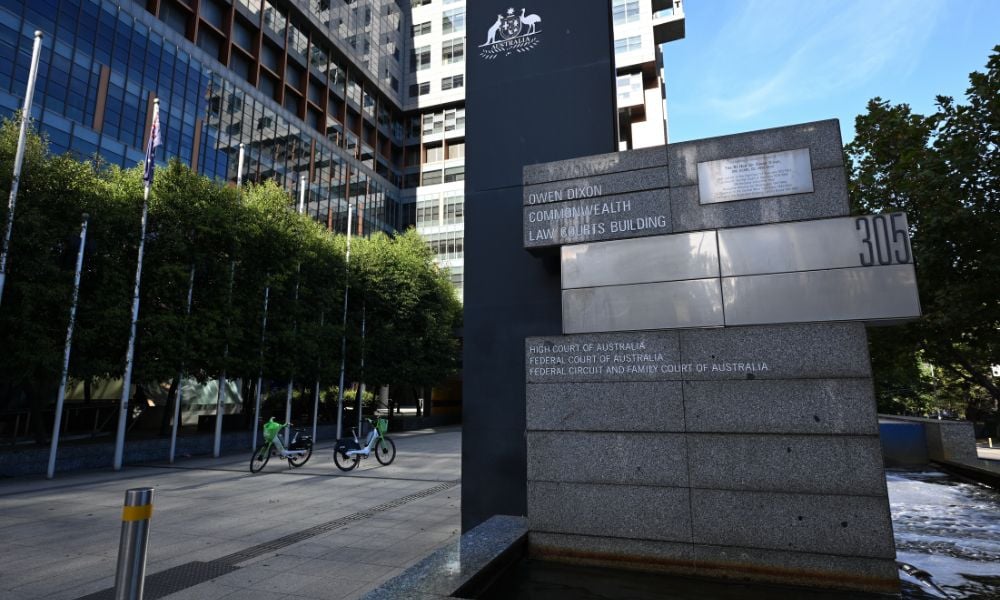
Ruling confirms Chorley exception is not part of Australia’s common law
In a case where the appellant engaged the respondent as his solicitor, the Australian Capital Territory’s Supreme Court issued no order for the appeal costs upon determining that it could not compensate the respondent for his legal costs of the appeal.
In Cheqrouni v Barhen [2026] ACTSC 3, the respondent sought payment of various disputed amounts relating to legal costs in proceedings before the Magistrates' Court. On 27 August 2025, the Magistrates Court issued summary judgment in connection with an undisputed component of costs.
On 15 October 2025, the appellant appealed the summary judgment order and an order refusing to set it aside. On 13 November 2025, he paid the amount due under the summary judgment order.
Separately, in the Supreme Court, the appellant filed an originating application seeking a costs assessment. On 14 November 2025, Elkaim AJ issued an ex tempore decision setting aside the originating application.
On 17 November 2025, given the futility of his appeal, the appellant filed a notice to discontinue his appeal dated 15 October 2025. The appellant disputed the costs of this appeal.
Citing Bell Lawyers Pty Ltd v Pentelow [2019] HCA 29, the Supreme Court of the Australian Capital Territory did not find the respondent lawyer entitled to costs, given his status as a self-represented litigant during the appeal proceedings.
The Supreme Court noted that the costs under the rules involved money paid or liabilities incurred for professional legal services. Such costs did not include the time self-represented litigants spent preparing and conducting their cases.
As a general rule, self-represented litigants could not receive compensation for time spent in litigation. For self-represented litigants who were lawyers, the UK ruling of London Scottish Benefit Society v Chorley (1884) 13 QBD 872, used to provide an exception.
However, in Bell Lawyers, the majority determined that the Chorley exception was not part of Australia’s common law. The majority did not disturb the principle that governments and other agencies employing in-house lawyers could recover costs for their professional services.
In this case, the Supreme Court saw no reasonable prospects of success. The Supreme Court pointed out that the summary judgment order’s subject matter was an uncontested component of costs payable to the respondent.
In the circumstances, the Supreme Court found no basis to vary the usual costs order for a discontinued appeal even if the respondent had legal representation in the appeal proceedings.