Insurers accepted some damage but refused embankment costs

A NSW court has ordered insurers to pay $2.1 million after they declined to cover weather-damaged highway works and never responded to a formal claim.
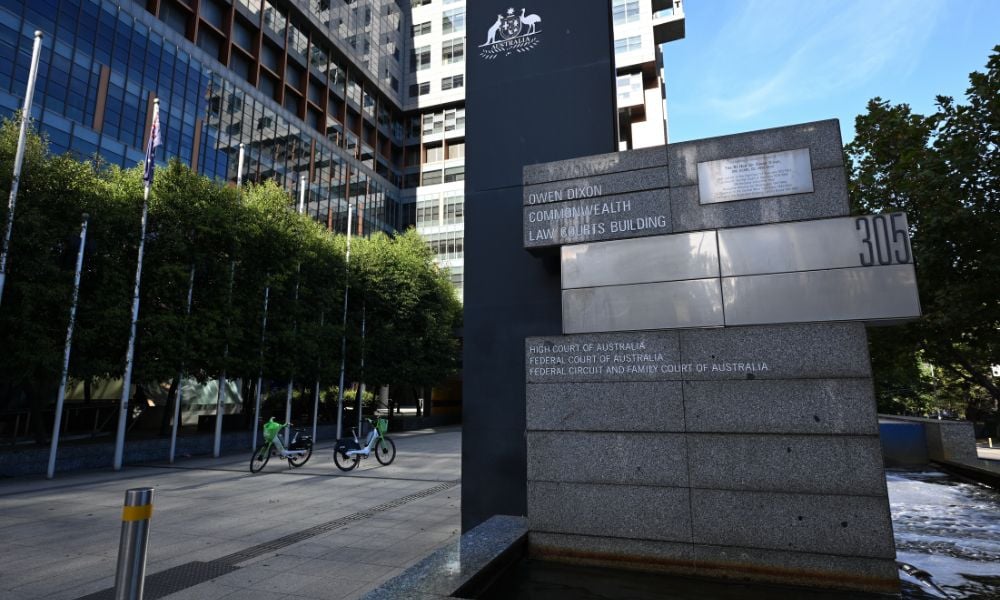
In Acciona Infrastructure Australia Pty Ltd v Zurich Insurance plc UK Branch [2026] NSWSC 185, decided on 11 March 2026, Justice Peden of the NSW Supreme Court gave judgment for Acciona Infrastructure Australia Pty Ltd against Zurich Insurance plc UK Branch, Great Lakes Reinsurance (UK) plc, and SCOR UK Company Ltd.
In 2013, Acciona entered a design and construct contract with the Department of Transport and Main Roads for the State of Queensland to upgrade a section of the Bruce Highway. Severe weather events in February and May 2015 damaged works on site. Acciona made two indemnity claims under its insurance policy covering the contract works for physical damage, and demanded the insurers pay the cost of repatriation of the works.
By December 2016, the insurers acknowledged Acciona's final revised claim and accepted the policy responded to some damage, but declined to indemnify the "Embankment costs." On 8 July 2019, Acciona's lawyers wrote to the insurers' lawyers attaching expert geotechnical engineer Mr Peter Sharp's report and asked the insurers to accept the Embankment claim. The insurers never replied. Acciona commenced proceedings in October 2019.
The dispute centred on a single binary issue: did the severe weather events cause damage to the Embankment, or did defective road fill necessitate the repairs? The insurance policy covered weather-caused damage but not construction defects, though it would respond where damage existed even if defects also contributed to the need for repairs.
The Court referred the matter to Mr Richard Cheney SC, assisted by expert quantity surveyor Mr Simon Lowe. In March 2025, the referee held a four-day hearing with over 10,500 pages of material and more than 200 pages of oral and written submissions.
The referee found in Acciona's favour, concluding that Mr Sharp's evidence, corroborated by soil surveys, a 2015 Golders Report recording instability, and the oral evidence of Acciona's project manager Mr Jose Santonja, was "strongly supportive" of damage caused by saturation, instability, shrinking and swelling effects, erosion, moisture infiltration, and a significant reduction in the shear strength of materials in the Northbound Offramp. The insurers led no contradictory expert evidence. The referee delivered his findings in a report dated 9 May 2025 (the First Report).
At the adoption hearing, the insurers raised two challenges to the First Report. First, they argued the referee denied them natural justice by allowing Acciona to rely on the Sharp report and other expert reports whose authors were never called or cross-examined. Justice Peden rejected this, noting the insurers had been served with the Sharp report before proceedings commenced, the reports were in the agreed tender bundle, and the insurers made full submissions on their use and weight before the referee without ever applying to lead rebuttal evidence or cross-examine Mr Sharp.
Second, the insurers argued the referee gave inadequate reasons for allowing the Embankment costs. Justice Peden rejected that too, finding the referee's reasons were sufficient and that his conclusion was not one that no reasonable referee could have reached.
The referee's supplementary report denied Acciona interest under s 57 of the Insurance Contracts Act 1984 (Cth). The court applied the two-question test from DTZ Worldwide Limited v AIG Australia Limited [2025] NSWSC 12: when did the insured first make the claim that succeeded, and when did the insured provide adequate information in support of it?
Although the Sharp report appeared in Acciona's pleadings, it had been cited there in support of a different characterisation of damage. Acciona only articulated its specific theory of saturation, instability, shrinking and swelling effects, erosion, moisture infiltration, and reduction of shear strength at the reference hearing itself. The referee concluded the claim was "riven with complexity" and it was unreasonable to have expected the insurers to pay before the hearing.
Justice Peden agreed, adopted both referee reports in full, and gave judgment for Acciona in the sum of $2,109,335.42.