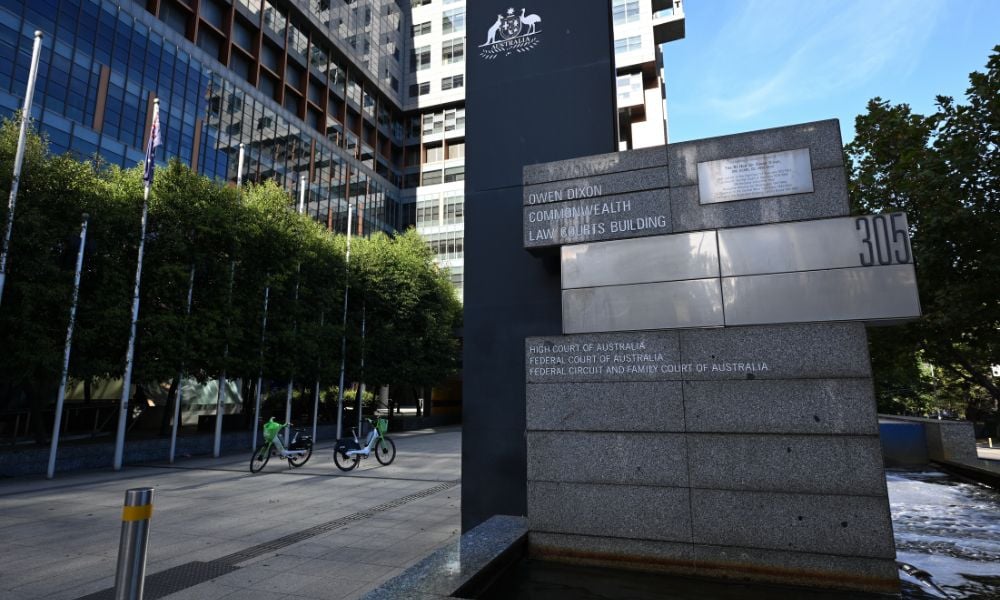
Gallagher Bassett has spent eighteen months assembling an integrated legal and claims operation in the UK. In Australia, where non-lawyer firm ownership has been permitted since 2001, the group already dominates the TPA market. It does not yet own an Australian law firm. The question is what happens when those two facts collide
When Gallagher Bassett completed its acquisition of London maritime law boutique Mays Brown in May, the story was reported as a UK development — a claims management company buying its third British law firm, building toward a vertically integrated legal and claims offering under one roof.
Read it that way in Australia and you are reading it wrong.
Gallagher Bassett is not an offshore player watching from a distance. It is the largest claims administrator in Australia. It employs over 2,000 claims professionals across every state and territory. It holds major government contracts with icare in New South Wales and is an authorised agent for WorkSafe Victoria, administering workers' compensation for more than three million private sector workers in those schemes alone. According to the company's own description, it is Australia and New Zealand's largest and most trusted third-party claims administrator.
And unlike in Canada — where non-lawyer ownership of law firms remains prohibited across most provinces — Australia moved on this question more than two decades ago. New South Wales lifted restrictions on non-lawyer law firm ownership and investment in 2001. The rest of the country has followed at varying speeds. The regulatory architecture that makes the UK model possible exists here already.
Gallagher Bassett has not yet acquired an Australian law firm. But Manan Sagar, the group's EMEA chief executive and architect of its legal build-out, stated in January 2026 that the year ahead would be one of "further integration, broader capabilities and expansion into new geographies." The legal solutions division he has built in the UK — 180 people across three acquired firms — is explicitly described by the company as a global platform. Australia is the group's largest market outside North America, and the only major jurisdiction in which it operates at dominant scale where the regulatory permission for an integrated legal model already exists.
To understand why this matters, it helps to understand the full scope of what the company has assembled in the UK over the past eighteen months. The sequence runs as follows: Strata Solicitors, acquired in 2017, handles motor and liability claims litigation and recoveries. Caytons Law, acquired in December 2024, brought defence litigation capabilities across financial lines and professional indemnity. Then came WK Webster, a global marine and transit claims manager acquired in 2025, followed by Reck & Co., a Bremen-based marine claims firm founded in 1848, acquired in February 2026. Mays Brown — shipping and maritime law, City of London, 20-year history — followed in May.
The result is a 180-person legal operation sitting inside a claims management business, inside a $15 billion revenue group. The strategic logic, articulated by Sagar, is to eliminate what he calls the fragmentation of the traditional model: a claim administered by one party, then passed to a law firm, then returned, then resolved — each handoff adding delay and cost.
"If you are just administrating a claim and then passing it across to a law firm to manage the legal side of it," Sagar told Legal Futures, "in our opinion you are not acting in the best interest of the client."
The pitch to insurers and large corporates is a single supplier, simultaneous legal and claims management, faster resolution, lower total cost. It is compelling. And in Australia, Gallagher Bassett does not need to acquire Australian law firms for regulatory permission — that permission has existed since 2001.
For Australian law firms that hold insurance panel appointments — and particularly those doing workers' compensation, public liability, professional indemnity and general insurance defence work — the Gallagher Bassett model poses a structural question that cannot be deferred indefinitely.
Panel arrangements in Australia's insurance sector involve insurers and TPAs directing large volumes of legal work to approved firms. Gallagher Bassett, as the country's dominant TPA, is already one of the most significant sources of that referral flow. If it were to move toward an integrated model here, replicating what it has built in the UK, the volume of work it currently directs outward to panel firms would instead be retained in-house.
This is not a remote contingency. The company's legal solutions division was listed in the Legal 500 for the first time in late 2025 — a marker of credibility that the division's UK head, John Fearn, cited as evidence of the progress made. Gallagher Bassett's global head of M&A, Matt Foote, has described the acquisition strategy as "an integral part of our long-term growth plans." The company's January 2026 strategy statement was explicit that new geographies are in scope. None of this points to Australia specifically — but it does not exclude it, and the commercial logic for Australia is stronger than for almost any other jurisdiction precisely because the regulatory barrier does not exist here.
The Australian legal services market is already under structural pressure from outside capital. A 2026 report by ResearchAndMarkets found that by end-2025, private equity accounted for 31% of all legal M&A in England and Wales, up from 20% in 2023. That is a UK data point, but the trend it reflects — external capital reshaping firm ownership and consolidating volume work away from the independent bar — is visible in Australia too, particularly in personal injury and workers' compensation where PE-backed consolidators have been active.
The Canadian version of this story ends with a regulatory barrier. The UK version is already unfolding. But the Australian version has a dimension neither of those captures: Gallagher Bassett's Australian operation is a public sector partner, not merely a commercial player.
Its contracts with icare and WorkSafe Victoria involve administering workers' compensation claims for millions of injured workers — a function that is simultaneously commercial and quasi-governmental. The legal work that flows from those claims — disputes, reviews, litigation — is currently handled by independent law firms on panels. An integrated model that absorbed that legal work in-house would not merely affect the commercial insurance bar. It would affect the firms doing publicly funded workers' compensation work, with direct implications for injured workers' access to genuinely independent legal advice.
This is the version of the conflict of interest question that carries particular weight in Australia. In England and Wales, the Solicitors Regulation Authority oversees ABS entities and requires separately regulated status for each legal entity within an integrated structure. In Australia, the equivalent oversight framework varies by state — and the question of whether a law firm owned by the country's largest workers' compensation administrator can genuinely act independently in disputes against that same administrator's decisions has not yet been tested at scale.
Gallagher Bassett would undoubtedly point out that it currently refers legal work outward rather than retaining it, and that its obligations to injured workers under its icare and WorkSafe mandates are separately governed. That is true. But the UK model it is building makes those boundaries structurally harder to maintain — and the history of ABS regulation in England and Wales, now in its second decade, offers ample evidence that Chinese walls between a TPA parent and its subsidiary law firms are more porous in practice than they appear on an organisational chart.
For managing partners at firms with significant insurance or workers' compensation practices, three things are worth tracking closely.
First, any announcement from Gallagher Bassett of a legal services acquisition or establishment in Australia. The UK pattern — Strata, then Caytons, then Mays Brown — involved acquiring established firms with existing client relationships rather than building from scratch. Gallagher Bassett has been explicit that cultural alignment matters in its acquisition targets: it is looking for founders who want scale and stability without being absorbed into a large law firm. That description fits a number of Australian insurance defence and workers' compensation boutiques precisely.
Second, how the relevant law societies and state regulators respond — or more accurately, whether they are even watching. The regulatory framework that permits non-lawyer ownership in Australia is now more than two decades old, designed well before an entity as large and vertically integrated as Gallagher Bassett existed in the market. If and when the integrated model arrives here at scale, the adequacy of existing oversight frameworks will be the central question — and on current evidence, no regulatory body has yet engaged with it publicly.
Third, and most urgently: whether your own panel relationship with Gallagher Bassett, or with any insurer that uses it as a TPA, has been reviewed recently for what an integration scenario would mean for referral volumes. The time to have that conversation is not when the announcement lands. In the UK, Strata Solicitors was quietly acquired in 2017, Caytons in 2024 and Mays Brown in 2026. The firms that lost referral work to those acquisitions did not see it coming. There is no reason their Australian equivalents should make the same mistake.