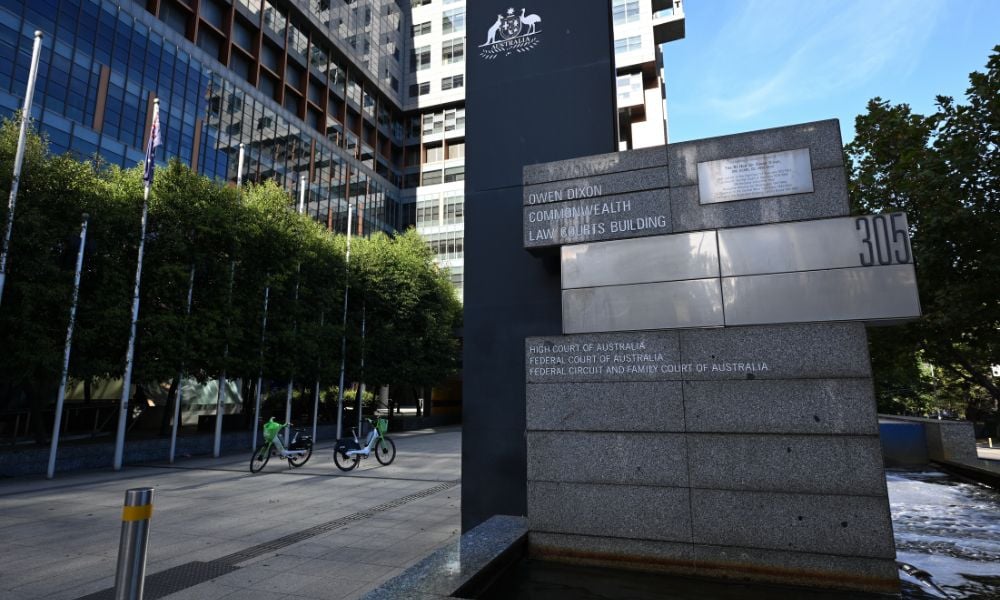
Justices refuse to recognise common law defence to ameliorate officer liability

The Australian High Court has ruled that the Commonwealth and its officers had no defence against liability for the tort of false imprisonment relating to a plaintiff’s immigration detention between 28 July 2022 and 8 November 2023.
The plaintiff in Abdel-Hady v Commonwealth of Australia [2026] HCA 17, an Austrian citizen with thrombophilia, first arrived in Australia in 1997 and held various visas.
On 31 March 2017, the minister for immigration and border protection cancelled the plaintiff’s active visa under s 501(2) of the Migration Act.
Based on the Federal Circuit and Family Court of Australia’s finding that ss 189(1) and 196(1) of the Migration Act 1958 (Cth) did not authorise his detention from 28 July 2022 to 13 February 2024, the plaintiff claimed damages for false imprisonment for that period via an amended statement of claim.
The plaintiff alleged that the detaining officer was liable for false imprisonment and that the Commonwealth was vicariously liable as the officer’s employer. Alternatively, the plaintiff asserted that the officer acted as a Commonwealth agent, such that the Commonwealth was directly liable for the officer’s acts.
In its defence, the Commonwealth argued that the detaining officer:
In a special case filed on 13 August 2025, the parties sought the Full Federal Court’s opinion on the single legal question of whether the Commonwealth and its officers had a defence against liability for the tort of false imprisonment in connection with the plaintiff’s immigration detention from 28 July 2022 to 8 November 2023.
The High Court of Australia answered no to the single question of law.
In NZYQ v Minister for Immigration, Citizenship and Multicultural Affairs (2023) 280 CLR 137, the High Court reopened and overruled the constitutional holding in Al-Kateb.
In NZYQ, the High Court found that ss 189(1) and 196(1) of the Migration Act were invalid in their application to an unlawful non-citizen whose removal from Australia under s 198 lacked any real prospect of becoming practicable in the reasonably foreseeable future, given that the provisions were inconsistent with Chapter III of the Constitution.
According to Chief Justice Gageler and Justices Gleeson and Beech-Jones, under the constitutional holding in NZYQ, ss 189(1) and 196(1) have always been invalid in their application to an unlawful non-citizen whose removal from Australia under s 198 had no real prospect of becoming practicable in the reasonably foreseeable future.
To the extent of that invalidity, the justices held that the statutory duty that ss 189(1) and 196(1) imposed on an officer under the Migration Act – who need not be a federal executive government officer employed under the Public Service Act – to detain an individual whom the officer reasonably suspected was an unlawful non-citizen has always been incapable of lawfully justifying detention under those provisions.
The justices added that the statutory duty could not defend against a common law action for false imprisonment against the detaining officer, even if the detention happened after Al-Kateb and before NZYQ.
The justices refused to recognise a novel propounded common law defence to ameliorate the detaining officer’s exposure to liability for the tort of false imprisonment, as the common law could not develop inconsistently with foundational constitutional principles, including the principles of judicial authority and executive responsibility.
The justices found that recognising such a defence would transform a federal executive government officer’s responsibility to ascertain and comply with the law limiting the officer’s power into a common law immunity from a common law consequence of action, which a court subsequently determined to have transgressed such a legal limit and thus exceeded that power.