Proposed filing also asked whether census should distinguish between sex and gender

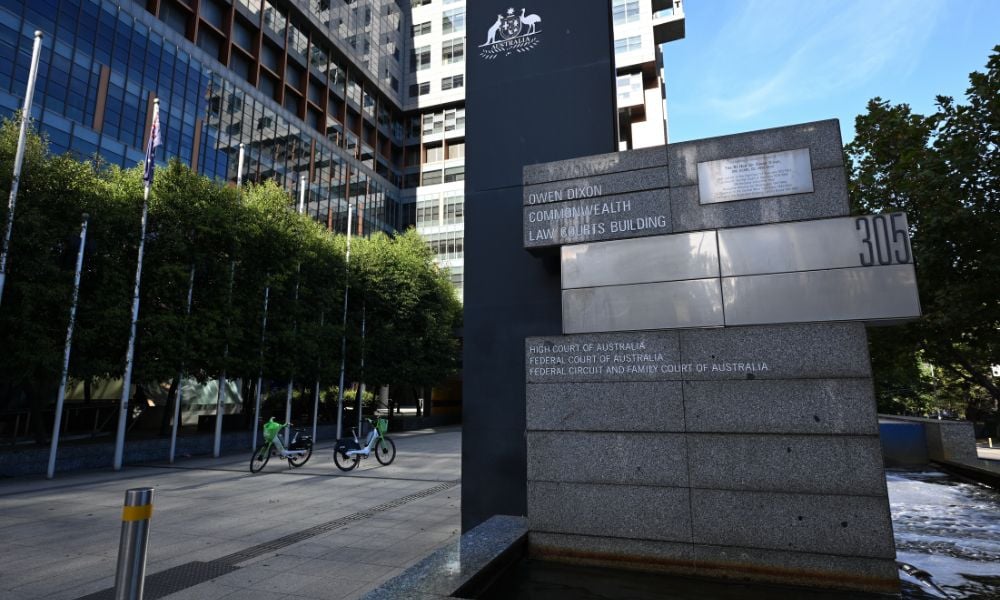
A justice of the Australian High Court refused a proposed application for leave to issue or file a constitutional or other writ, filed on 6 July 2026, seeking to raise the question of whether there were only two genders.
In the matter of an application by Williamson for leave to issue or file [2026] HCASJ 20, the applicant sought the required leave to issue and file a proposed application for a constitutional or other writ. In her proposed application and supporting affidavit, she raised questions such as:
In her proposed application, the applicant sought declaratory relief as follows:
The applicant wanted to add the Commonwealth as the first defendant and Australia’s treasurer as the second defendant.
Justice James Edelman of the High Court denied the applicant’s proposed application as outside the court’s jurisdiction and as abusive of process.
Describing the proposed application as verbose and confused, the judge considered it appropriate to dispose of it other than in open court under r 13.04 of the High Court Rules 2004 (Cth).
Justice Edelman noted that someone might answer some of the questions raised from the perspectives of biology, sociology, anthropology, ethics, linguistics, linguistic philosophy, political philosophy, or public policy.
However, the judge found no justiciable controversy and no matter in the questions the applicant raised or the relief she requested. Edelman explained that the questions raised did not involve:
Justice Edelman rejected the applicant’s assertion that the Commonwealth acted beyond its powers in the 2026 census by drawing a nonexistent distinction between sex and gender.
The judge also rejected as insufficient the applicant’s argument that she had “a great interest in the law and constitutional law” and “a religious interest in gender not being fluid or alterable.”
Edelman added that the legal issues of statutory interpretation in Giggle for Girls Pty Ltd v Tickle [2026] FCAFC 64, which the proposed application cited, had no bearing upon any of the broad issues that the applicant wanted to raise.
Even if the proposed application identified a justiciable legal question, Justice Edelman of the High Court of Australia would have found it abusive of process because it lacked any basis for the applicant’s standing.
Enjoy this story? Read the latest litigation and dispute resolution news on the main page!