Worker terminated based on serious misconduct after missing medical exam

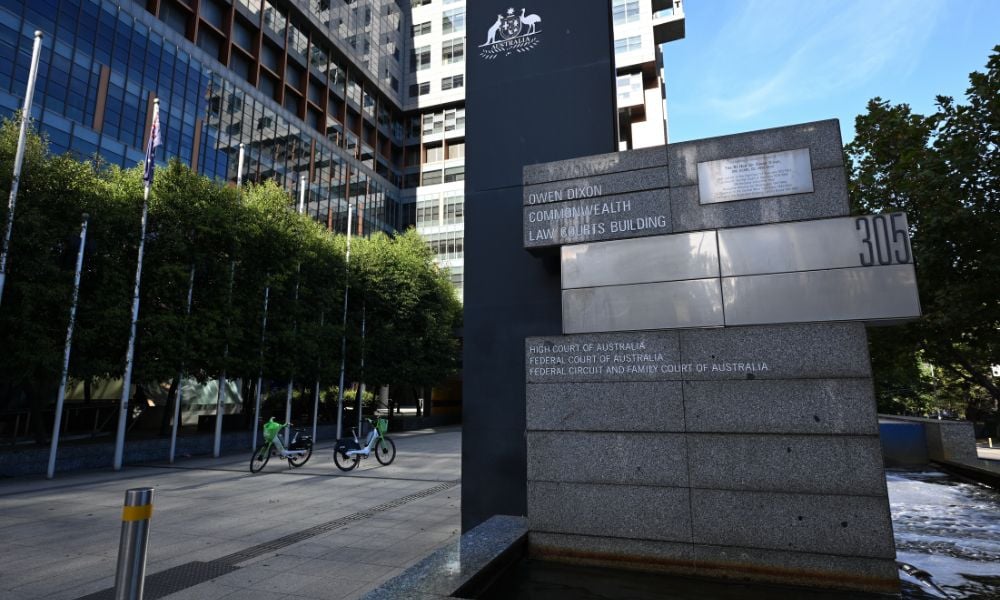
A justice of Australia’s High Court dismissed an application seeking leave to issue or file a proposed application for a constitutional or other writ in proceedings where an employee claimed that his ex-employer and several employees treated him unfavourably.
In the matter of an application by Biddle for leave to issue or file [2026] HCASJ 1, the applicant employee did not attend a scheduled independent medical examination. On 24 April 2023, the employer terminated the applicant's employment based on serious misconduct.
Later that year, before the Victorian Civil and Administrative Tribunal (VCAT), the applicant initiated proceedings alleging unfavourable treatment, in breach of the Equal Opportunity Act 2010 (Vic).
Specifically, he asserted a disability consisting of a “functional neurological disorder” with “a mystery persistent 'brain fog'” that impacted his thoughts’ and communications’ quality in “hidden and complex” ways.
On 28 January 2025, before the Supreme Court of Victoria, under s 29 of the Civil Procedure Act 2010 (Vic), the applicant applied to prevent the employer, several of its employees, and their legal representatives from participating in the future. He alleged breaches of their obligations during the VCAT proceedings. On 27 March 2025, O'Meara J dismissed the s 29 application.
Before the Supreme Court of Victoria’s Court of Appeal, the applicant sought leave to appeal. On 3 October 2025, Beach JA denied leave upon determining that the proposed appeal lacked prospects of success and that the application lacked merit under s 14D(3) of the Supreme Court Act 1986 (Vic).
In proceeding M83/2025, before the High Court, the applicant sought special leave to appeal Beach JA’s entire judgment.
Also in proceeding M83/2025, on 31 October 2025, the applicant brought an interlocutory application seeking 10 orders as “necessary procedural and/or reasonable accommodations” relating to his special leave application, given his asserted disability under rr 2.02, 6.01.1, and Part 13 of the High Court Rules 2004 (Cth).
The applicant specifically sought:
On 27 November 2025, Edelman J directed the registrar to refuse to issue or file the applicant's proposed application for a constitutional or other writ dated 26 November 2025 without leave of a High Court justice under s 6.07.2 of the High Court Rules.
Through an ex parte application on 28 November 2025, the applicant sought leave to issue or file the proposed application under s 6.07.3 of the High Court Rules.
A single justice of the High Court of Australia dismissed the application as an attempt to invoke its original jurisdiction on a confused or manifestly untenable basis.
Regarding proposed orders 2 and 3, Steward J found no arguable basis to issue the proposed orders and no urgency necessitating interim relief. Steward J noted that the interlocutory application seeking to stay the proceedings below remained pending, subject to a determination in due course.
Regarding proposed orders 4, 5, and 6, Steward J considered them fundamentally misguided. Steward J saw no duty of a public nature that remained unperformed to justify issuing a writ of mandamus. Given this finding, Steward J also found proposed order 1 futile.
Regarding proposed order 7, Steward J rejected the argument that s 14D(3) allowed the Court of Appeal and the High Court to substantially deny natural justice by indirectly discriminating against applicants with disabilities and breaching their equality of arms rights without legal recourse.
Steward J concluded that the applicant failed to provide any evidence establishing damage to him or any other applicant and failed to assert any arguable basis for the requested declaratory relief.