Racing NSW to appeal, saying decision puts state's 120 race clubs at risk
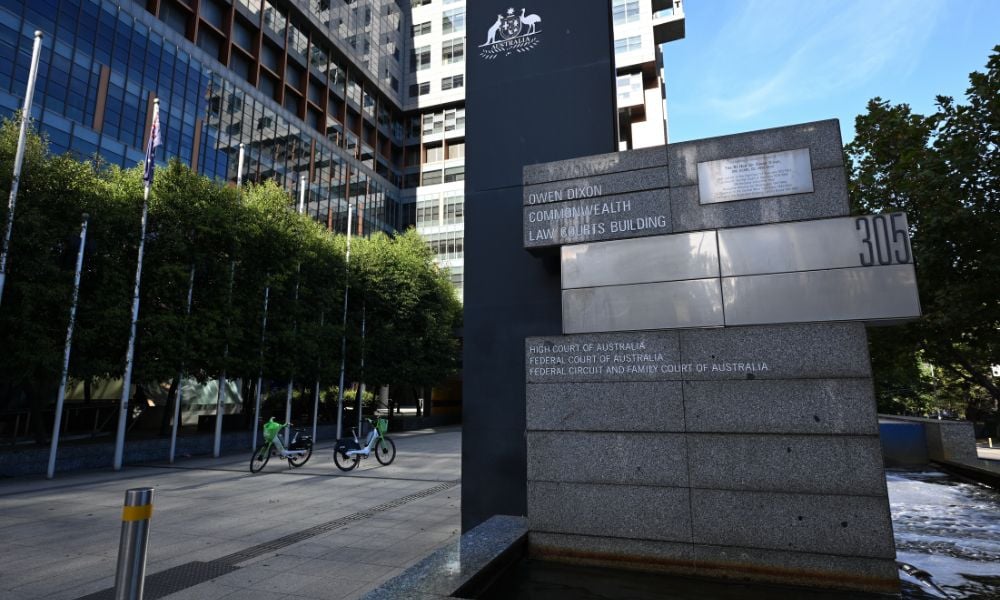
The NSW Supreme Court declared Racing NSW's administrator appointment over the Australian Turf Club invalid and of no effect on 11 March 2026.
In Australian Turf Club Ltd v Racing NSW (No 2) [2026] NSWSC 184, Justice Kunc found that Racing NSW had acted outside its statutory authority when it appointed Morgan Kelly of Ernst & Young as administrator of the Australian Turf Club Limited (ATC).
Racing NSW formally appointed Kelly on 15 December 2025, citing serious concerns about the club's financial position, corporate governance failures, and board dysfunction. The regulator relied on its power under s 14(2)(g) of the Thoroughbred Racing Act 1996 (NSW), which allows it to "appoint an administrator to conduct the affairs of a race club."
The ATC immediately challenged the appointment. Justice Slattery stayed it the following day, and the stay continued until Justice Kunc delivered the final ruling.
Justice Kunc found that Racing NSW had no statutory authority for the appointment and also identified, in the alternative, a further and separately fatal error in the regulator's reasoning.
On the primary ground, the court held that Racing NSW's statutory function under s 13(1)(b) of the Act, "to control, supervise and regulate horse racing in the State," extends only to matters concerning the actual racing of galloping horses as defined under the Australian Rules of Racing. It does not extend to a race club's financial management or corporate governance. The legislature gave Racing NSW power over "horse racing," not over "race clubs" as legal entities. The ATC's finances and board conduct fell outside that statutory boundary.
The court also found, in the alternative, a material error in Racing NSW's reasoning. Racing NSW dismissed the solvency report prepared by KordaMentha on the basis that the report assumed Racing NSW would extend its guarantee of the ATC's debt facilities. The court found this characterisation was factually wrong. The KordaMentha report identified multiple refinancing options that did not require any Racing NSW guarantee. By dismissing the report on a false premise, Racing NSW discarded the ATC's primary evidence of solvency, a mistake the court found could realistically have changed the outcome of the decision.
Racing NSW had also argued that its duty under s 11 of the Act, requiring each member "to act in the public interest and in the interests of the horse racing industry as a whole in New South Wales," independently authorised the appointment. The court rejected this, finding that s 11 imposes a personal duty on each individual appointed member, not a corporate duty on Racing NSW itself.
Justice Kunc did, however, confirm that Racing NSW's statutory power to appoint an administrator under s 14(2)(g) does not conflict with the Corporations Act, dismissing the ATC's argument on that point.
Racing NSW announced it would appeal the decision, warning the ruling could limit its ability to support the broader industry. "If that narrow interpretation were to stand, it could significantly restrict Racing NSW's ability to fund important club activities such as infrastructure, facilities and operational support that underpin racing across NSW," the regulator said in a news release.
Racing NSW noted that the judgment confirmed its statutory power to appoint an administrator does not conflict with the Corporations Act, and dismissed the ATC's claim in that regard. The regulator stressed, however, that the underlying concerns about the ATC remained unresolved. "The case was about how the legislation was interpreted, not the merits of Racing NSW's decision," it said.
Racing NSW also confirmed it provided record distributions to participants of $422 million last year, "which was $110 million more than any other jurisdiction in Australia."
The court ordered Racing NSW to pay the ATC's legal costs, subject to any variation at a 20 March 2026 directions hearing.