Penalty comes on top of $13.1m Binance already paid in client compensation

The Federal Court ordered Binance Australia Derivatives to pay $10m for misclassifying 524 retail clients as wholesale clients.
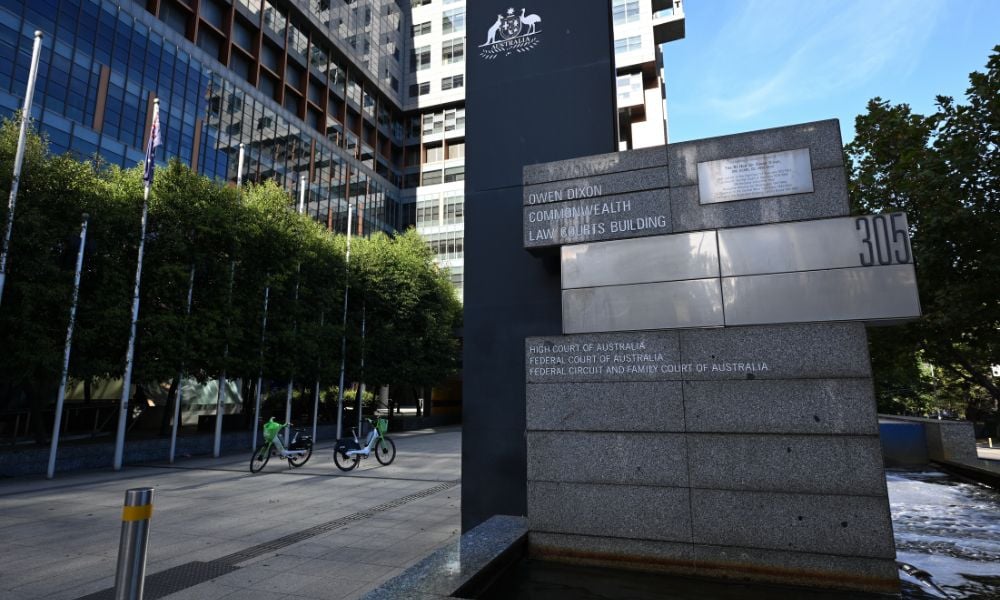
In Australian Securities and Investments Commission v Oztures Trading Pty Ltd trading as Binance Australia Derivatives (VID1381/2024), Justice Moshinsky of the Federal Court of Australia, Victoria Registry, handed down orders on 27 March 2026.
Oztures Trading Pty Ltd, operating as Binance Australia Derivatives, held Australian Financial Services Licence No. 425165 and offered high-risk cryptocurrency derivative products: USD-M Futures settling in USDT or BUSD stablecoins, Coin-M Futures settling in non-stablecoin cryptocurrencies, and options contracts settling in USDT.
To access these products, prospective clients had to complete a Wholesale Assessment confirming their status as a wholesale client or sophisticated investor under the Corporations Act 2001 (Cth). Between 7 July 2022 and 21 April 2023, Binance held a total of 611 clients. Of these, 524 did not provide sufficient information to confirm non-retail status, meaning Binance misclassified more than 85 per cent of its client base.
Approximately 460 clients were incorrectly classified as meeting the Sophisticated Investor Test through a multi-step onboarding process that included a 10-question multiple-choice knowledge test permitting unlimited attempts using the same questions each time. Binance gave none of these clients the mandatory written statement required under s 761GA(e) of the Corporations Act. A further 33 clients cleared the Individual Wealth Test without producing a qualified accountant's certificate given within the preceding six months confirming net assets of at least $2.5m or gross income of at least $250,000 for each of the last two financial years. Some clients in the Professional Investor category certified they were an "exempt public authority" despite being natural persons, and Binance accepted those certifications without adequate verification.
Binance's compliance team manually reviewed client documentation but did not identify the insufficiencies. Senior compliance staff provided no oversight of those reviews before or after onboarding, and no records existed of training on the Wholesale Clients Policy.
The 524 misclassified clients suffered total trading losses of approximately $8.66m and paid approximately $3.89m in fees to Binance, bringing aggregate harm to approximately $12.56m. Binance denied these clients the consumer protections the Corporations Act mandated for retail clients, including Product Disclosure Statements and Target Market Determinations. Binance also failed to ensure it provided financial services efficiently, honestly, and fairly, failed to comply with its AFS licence conditions, failed to maintain a compliant internal dispute resolution system, and failed to adequately train its employees. ASIC cancelled Oztures' AFS licence on 6 April 2023 at the entity's request.
Binance subsequently paid approximately $13.1m in compensation to the affected clients under a remediation programme ASIC oversaw and KordaMentha independently reviewed.
ASIC had warned industry participants about the misclassification of retail clients as wholesale clients in a March 2021 letter, which was sent in June 2021 to Mr Michael Sawyer, who was then the Responsible Manager of the entity that later became Oztures. Binance admitted the majority of the contraventions alleged by ASIC in the civil proceedings initiated in December 2024, and cooperated during both the investigation and the proceedings.
Justice Moshinsky ordered Binance to pay an aggregate pecuniary penalty of $10m to the Commonwealth and to pay ASIC's costs, fixed at $200,000.
"Binance failed to set up basic compliance checks and incorrectly approved hundreds of applications for complex, wholesale investor products," ASIC Chair Joe Longo said in a news release.
"Binance's shortcomings left more than 85% of their Australian customer base exposed to high-risk products they should have never been able to access, and without important consumer protections or rights, costing retail investors millions.
"This wasn't just a technical breach - it directly resulted in over $12 million in client losses."
Longo called the outcome "a clear warning to global financial services entities looking to set up shop in Australia," adding that "all financial services companies must follow the law from day one, and have proper client onboarding systems and processes in place. This includes financial services that relate to crypto and digital assets."