He officially succeeds Robert Reed in January 2027
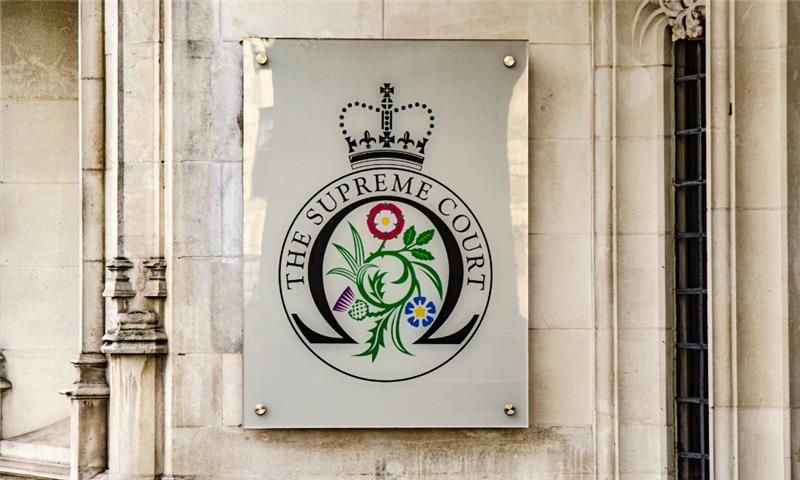
Former civil justice deputy head Michael Briggs has been announced as the incoming president of the UK Supreme Court.
He will officially succeed the retiring Robert Reed in January 2027. Briggs is the fifth to take on the mantle of president after the role was created in 2009.
In this role, Briggs will be the most senior judge in the UK and will be in charge of the Supreme Court and the Judicial Committee of the Privy Council. He will lead the justices and the court’s administration alongside the CEO and deputy president; moreover, he will be the court’s representative to relations with governments, parliament, other apex courts, and the media.
Briggs joined the Supreme Court in 2017 where he tackled cases involving the role of equity and fiduciary duty in common law. His tenure as civil justice deputy head, which began in January 2016, also made him de facto head of the Civil Procedure Rules Committee.
He headed up the Civil Courts Structure Review conducted from 2015 to 2016, which suggested setting up an online civil court. He was named judge in charge of the Chancery Modernisation Review in 2013, the same year he was appointed a lord justice of appeal. He was also the judge in charge of the 2009-2013 Lehman Brothers insolvency litigation.
Briggs was vice chancellor of the County Palatine of Lancaster from 2011 to 2013, where he served as chancery liaison judge for the Northern and North-Eastern Circuits. He became a High Court judge in 2006 and was attorney general to the Duchy of Lancaster from 2001 to 2006. He chaired the Bar Council’s law reform committee at one point.
He worked with the chambers of Charles Sparrow QC (now Serle Court) in Lincoln’s Inn. He focused on business and property litigation.
Briggs was the first lawyer in his family. He took silk in 1994.
He has delegated responsibility for the practice and procedure of the Judicial Committee of the Privy Council since 2022. According to the Supreme Court, he “has maintained a keen interest in modernising Court procedures and increasing the transparency of the Court’s work, most recently exploring the careful adoption of artificial intelligence in its administrative processes.”
His appointment as Supreme Court president was approved by King Charles III on the recommendation of the prime minister and lord chancellor, which was advised by an independent selection commission.
“It is a great privilege to be appointed president of the Supreme Court and to serve the public by upholding the rule of law. I look forward to working with colleagues across the Supreme Court and the Judicial Committee of the Privy Council to deliver justice of the highest quality, transparency and accessibility,” Briggs said in a statement.
Reed praised his successor as “a judge of the highest distinction, with previous experience of judicial leadership.”
“[Briggs] has also demonstrated his commitment to increasing the accessibility and efficiency of the justice system, both in domestic cases and in those heard by the Judicial Committee of the Privy Council. I wish him well in his new role,” Reed said.