The contract with Alstom involves the first battery-electric train fleet in the Southern hemisphere

Bell Gully has teamed up with global firm Ashurst in guiding the Greater Wellington Regional Council as it inked a 35-year $1.066m contract that involves delivering the first battery-electric train fleet in the Southern hemisphere.
In line with the Lower North Island Rail Integrated Mobility (LNIRIM) programme, Greater Wellington entered into a design, build and maintenance contract with French rail transport systems manufacturer Alstom. The programme is a joint initiative among the government, the Greater Wellington and Horizons regional councils, NZTA and KiwiRail that aims to acquire an 18-train fleet and related infrastructure for the Wairarapa and Manawatū rail lines.
Alstom’s contract requires the company to build 18 five-car battery electric multiple unit trains for the lower North Island. This construction is being co-financed by the Greater Wellington and Horizons regional councils and the government.
Alstom will construct the fleet in India. Māori owned company Indigenous Design and Innovation provided the symbols in which the trains will be decorated.
Greater Wellington oversaw the procurement with support from WSP. According to Ashurst projects and energy transition partner Alex Guy, the project “will deliver major benefits to the region, contributing towards decarbonisation goals , supporting regional growth and substantially increasing services on the Manawatū and Wairarapa lines”.
The train fleet will be christened as “Tūhono”, which translates to “connect” or “unite”. Mana Whenua approved the name, which represents how the trains will improve connections between urban centres and regional communities.
The new trains will replace carriages that are reaching end of life and are anticipated to double peak time services on the Manawatū and Wairarapa rail lines from 2030, according to a joint press release from Ashurst and Bell Gully.
“From Palmerston North and Masterton to Wellington, the Tūhono fleet will double peak time trains, increase off-peak services and support regional growth. Designed for New Zealand conditions, the new trains switch to batteries on track without overhead power, using technology proven in countries like Japan and Germany”, Greater Wellington chair Daran Ponter said in a Greater Wellington press release.
KiwiRail chief metro and capital programme officer David Gordon confirmed that KiwiRail had begun preparing the Wairarapa Line for the Tūhono fleet by renewing over 40 kilometres of track. Greater Wellington is also set to construct a new maintenance depot for the Tūhono fleet in Masterton and upgrade Manawatū line stations.
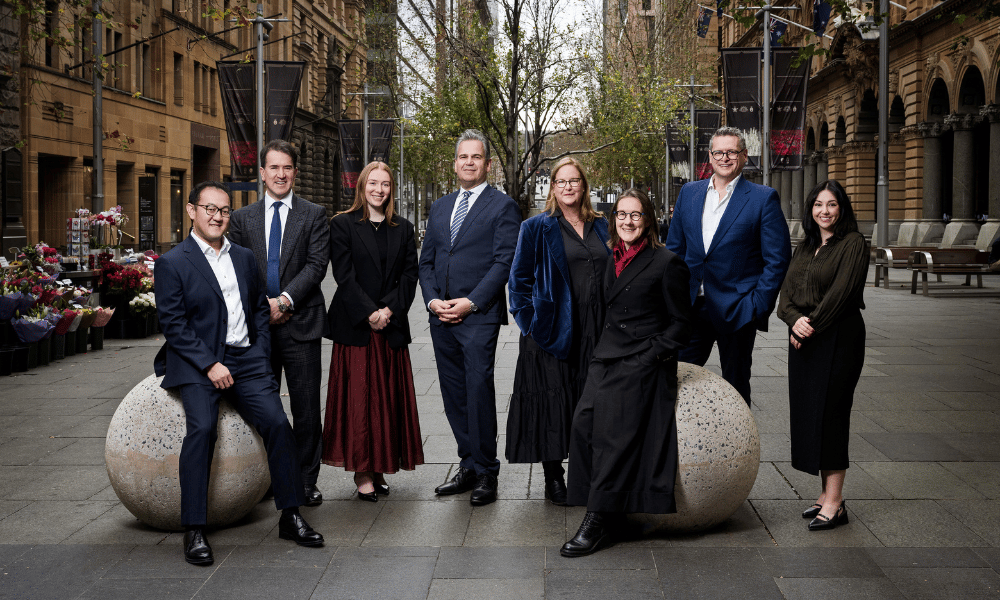
The Ashurst team, operating from Australia, consisted of Guy, lead counsel Lillian Yeung, consultant Kim Broadbent, senior associate Eloise Moore, and associates Matt Smethurst, Prashana Coomarasamy, Szimonetta Budai and Jeanina Wu.
Bell Gully’s team advised on the contract’s New Zealand law aspects, led by projects partners Angela Harford and Mathew Brown. They received support from senior associate Philip Zander.
“As a team based in Wellington we are delighted to support our long-standing client Greater Wellington with the delivery of new low-emission trains, which is truly market leading transport infrastructure in Aotearoa and will have significant connectivity benefits for our regions”, Harford said.
Bell Gully indicated that it was also advising Greater Wellington on wider aspects of the LNIRIM programme.
Recently, the firm confirmed its role advising dairy company Lactalis as it acquired Fonterra's global consumer and associated businesses in a $4.22bn deal. Corporate partners James Gibson and Alex Bond took the lead on a team that included partners Laura Littlewood, Graham Murray, Glenn Shewan, Liz Coats, Natasha Garvan and Jane Holland as well as senior associates Hannah Turton and Kate Driver.
Freshfields LLP (France) and Allens (Australia) also provided legal support to Lactalis. Bell Gully worked closely with both global firms on the deal.